Table of Contents
When I’m quoting an interior repaint in Vancouver, one of the first things I ask is, “What colours are you thinking?” If you’re painting over dark walls, that answer can change the price and schedule. I look at the colour that’s there now and how big a change you want to make. Going from a deep colour to white is where I start thinking about a third coat.
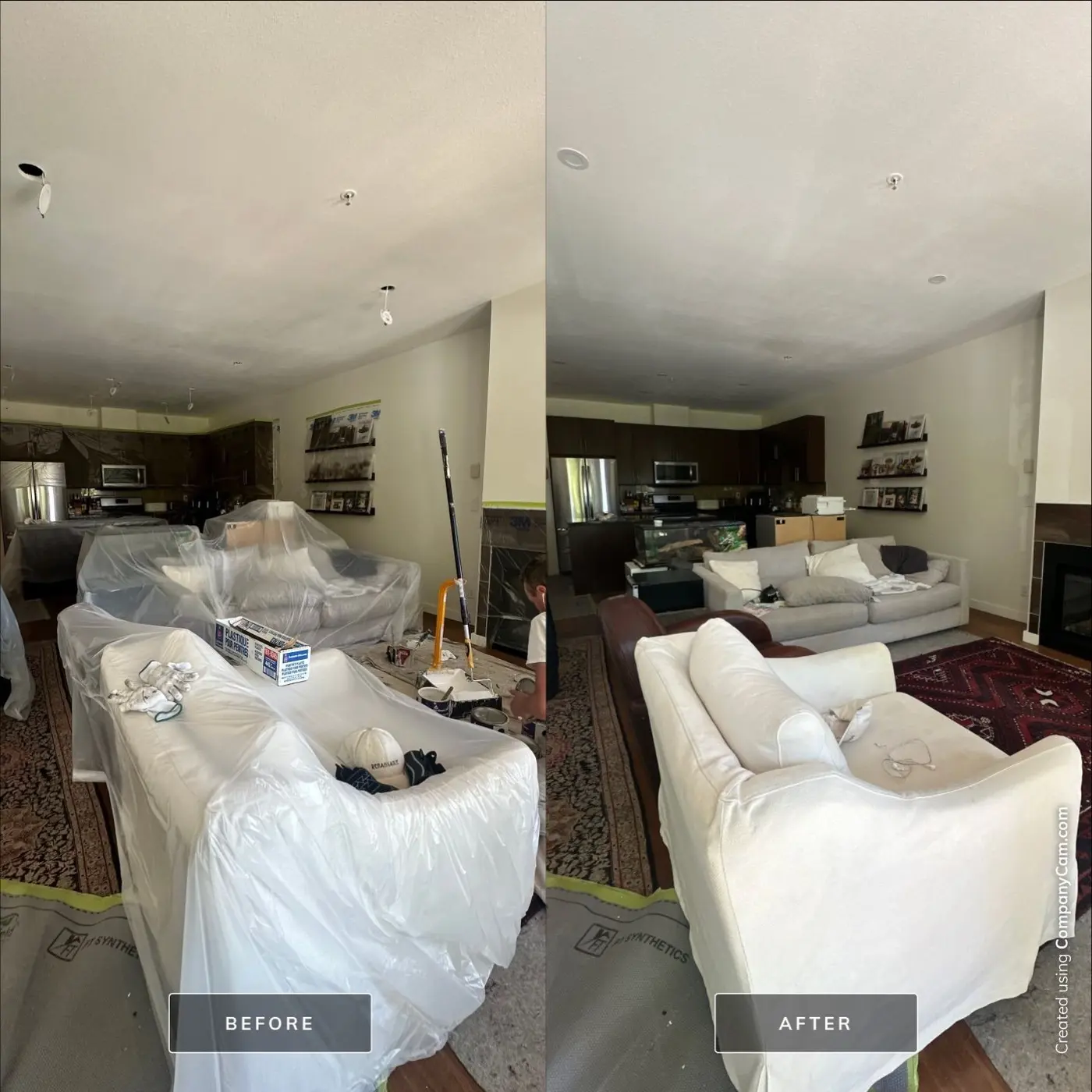
From dark red to white in Shaughnessy
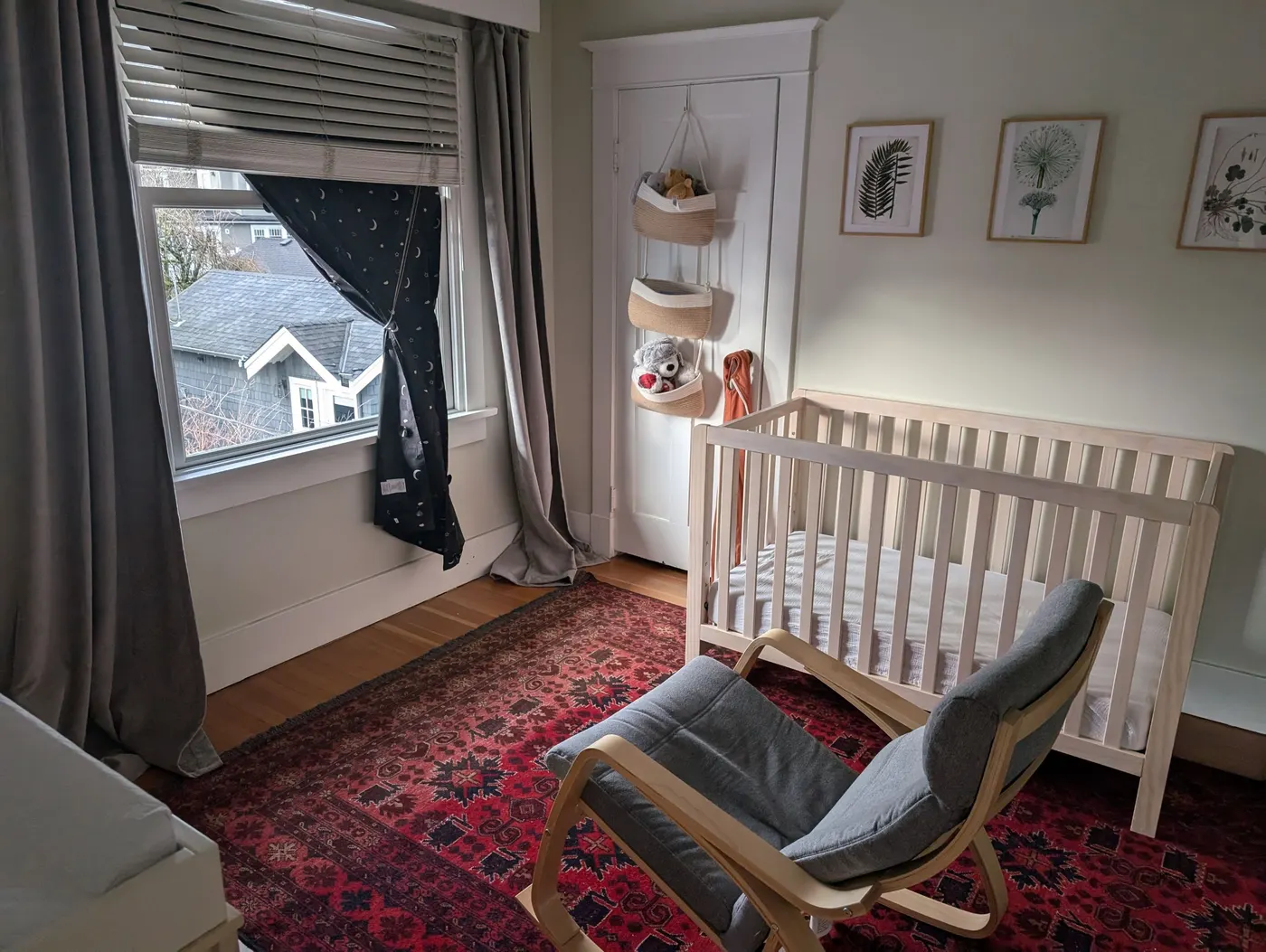
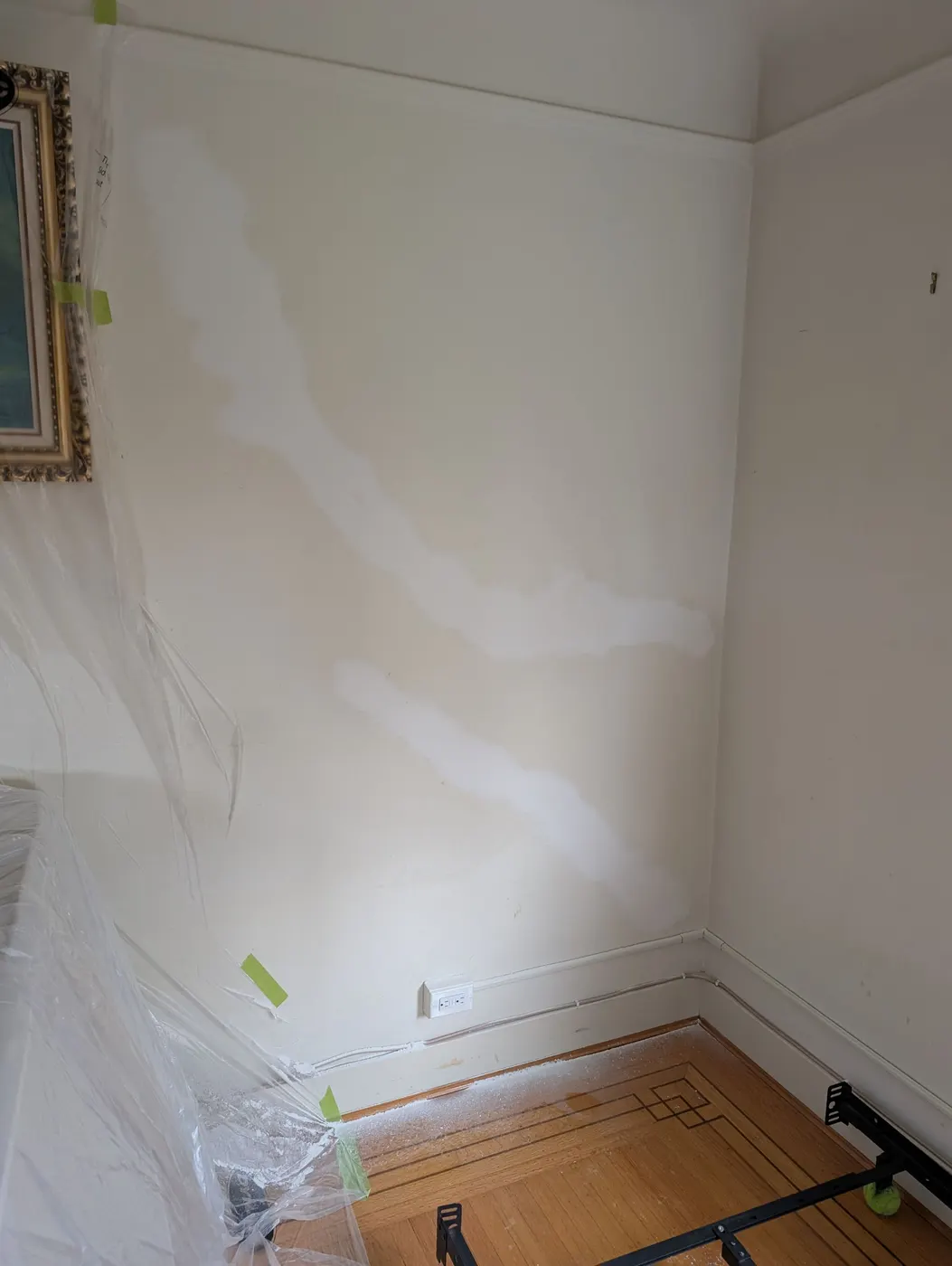
On a Shaughnessy repaint, we were taking dark red walls to white. We went straight to finish paint, and it took four coats to get an even white.
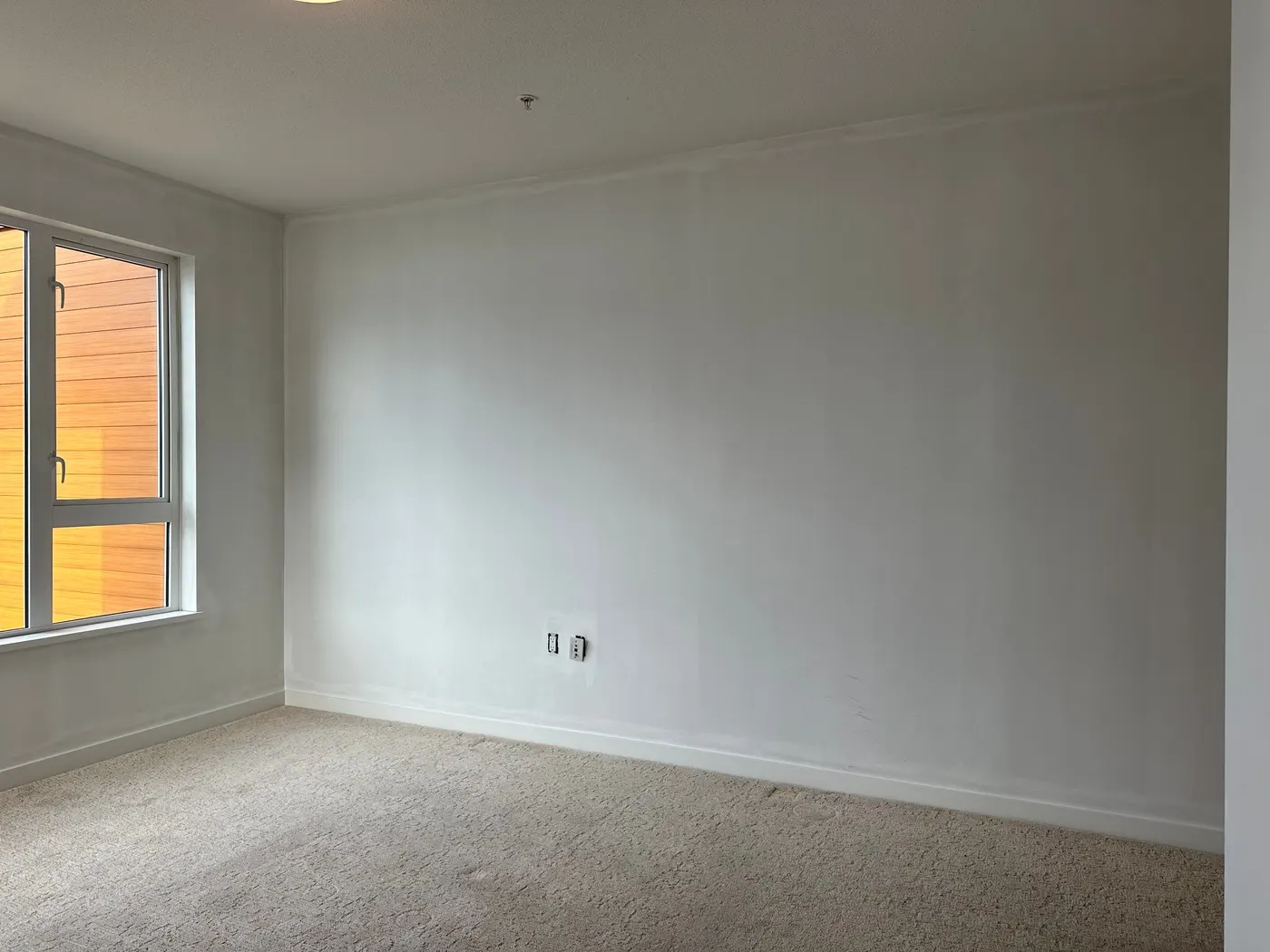
On another job, the existing walls were white with just a hint of blue. Going to bright white still took three coats. That job came to us through Meme Brooks of Meme Brooks Design.
Coats at a glance
| Colour change | What it took or what to expect |
|---|---|
| Dark red to white, straight to finish paint (Shaughnessy) | Four coats of finish paint for an even white |
| White with a hint of blue to bright white | Three coats |
| Any deep colour to very light or white | Quoted as two finish coats; a third coat is priced separately if needed |
| New colour is a bright red or yellow | Ask the manufacturer - they may specify a grey primer or a red or yellow base |
Why the old colour can show through
Hiding power is how well dried paint conceals the colour underneath. When a paint spec lists coverage in square feet per gallon, that figure gives the spread rate, or how much wall you can paint with a gallon.
Sources: Sherwin-Williams on paint hiding · Benjamin Moore’s paint specifications
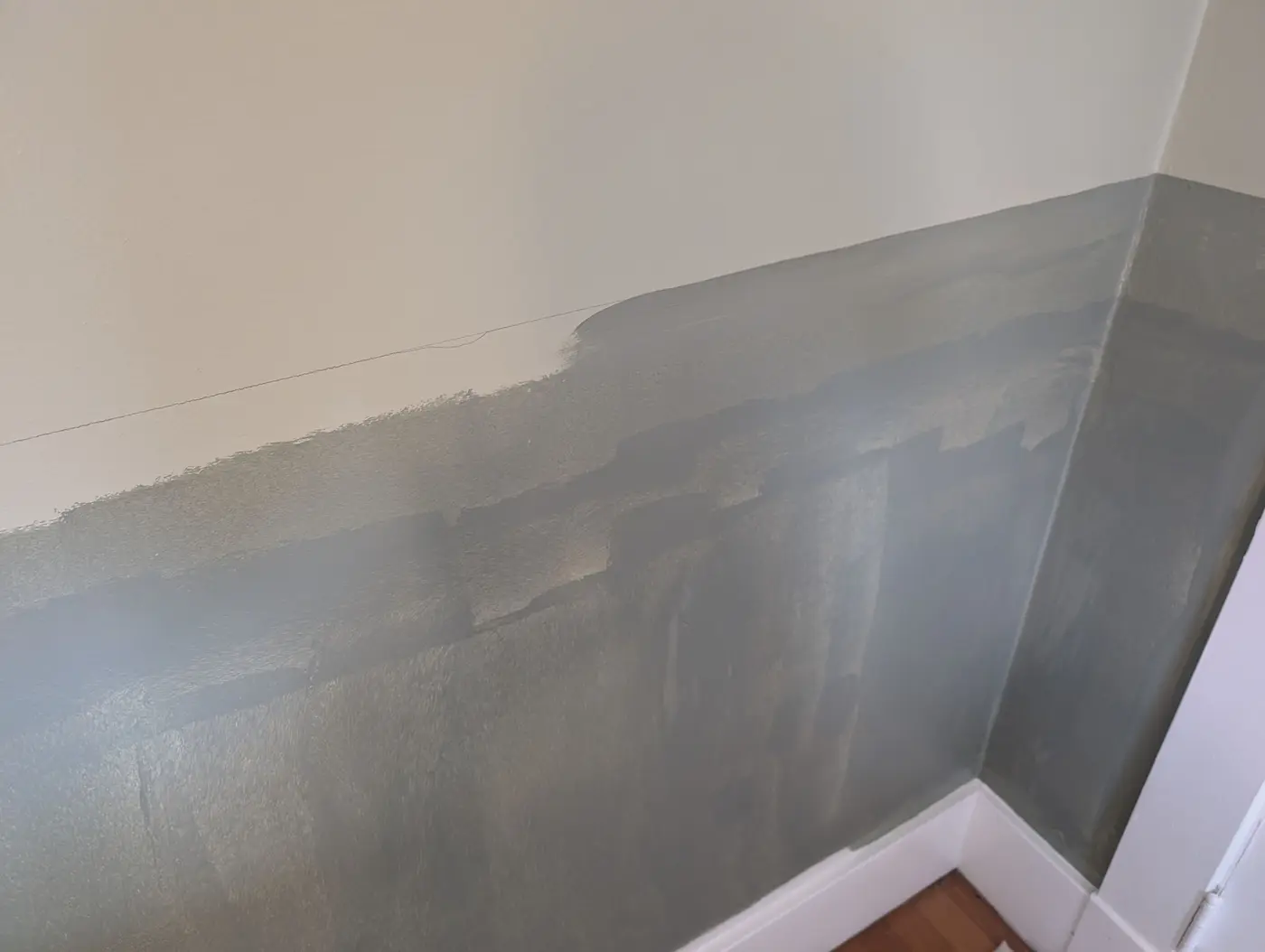
The bigger the difference between the old and new colours, the more any show-through stands out. Even a good paint can show the old colour in spots after two properly applied coats. That can happen with some newer low-VOC formulas, too. Hiding depends on the particular paint and the colours involved.
Does primer help when going from dark to light?
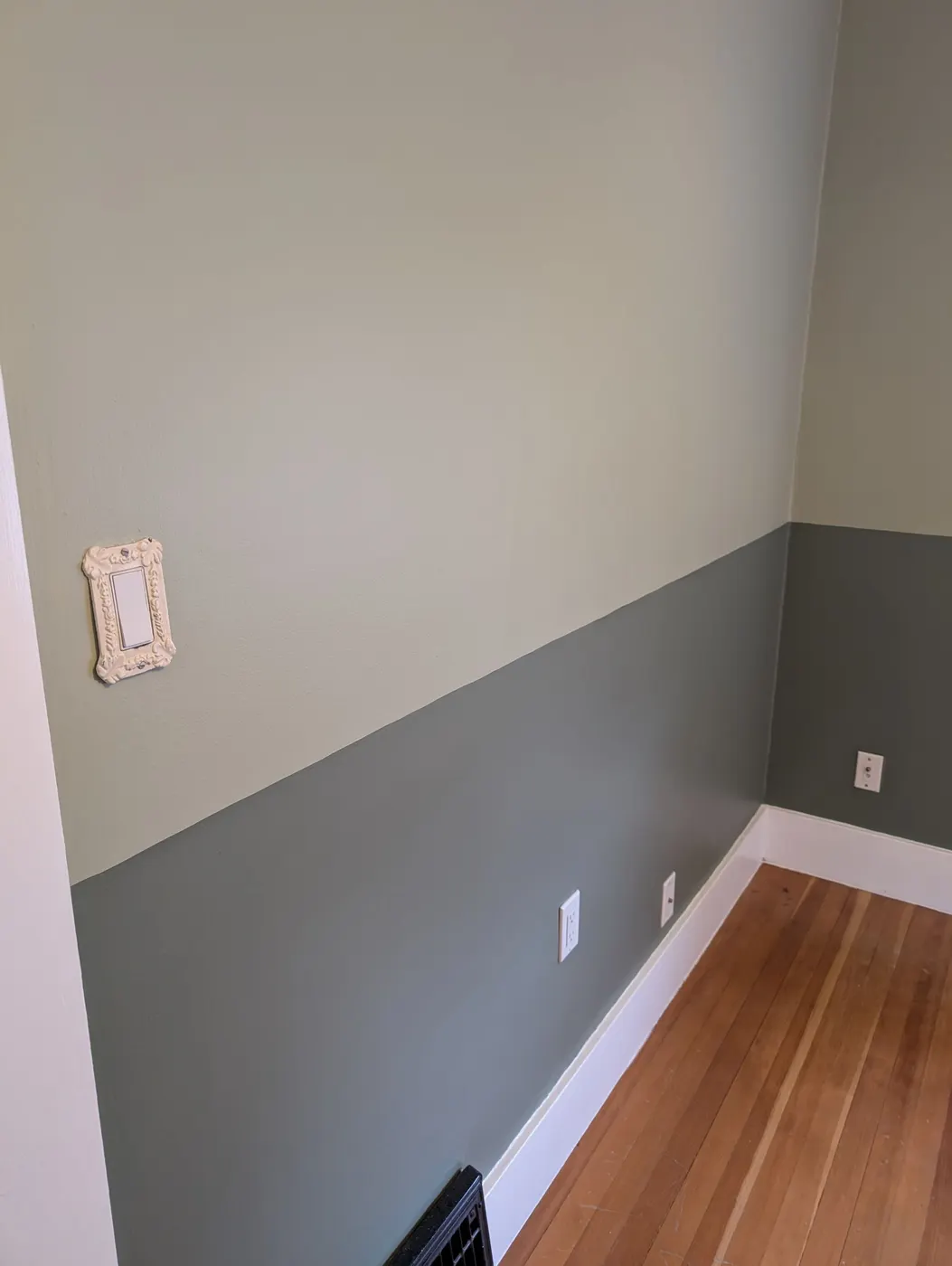
For a big change to white, a white high-hiding primer can mask more of the old colour on the first pass than some white finish paints. That gives the finish coats a lighter, more even base. Benjamin Moore’s Fresh Start High-Hiding All-Purpose Primer is one example.
Sources: Benjamin Moore’s primer guide
I recommend a premium finish paint and give the manufacturer the exact colour code so they can advise on the paint base and whether to use a primer. Some bright reds and yellows have less hiding power, and the manufacturer may specify a particular grey primer for those shades. Some paint lines also offer red or yellow bases, which the paint store can tint to match the exact colour.
Sources: Sherwin-Williams on primer shades for vivid colours · Sico’s paint base specifications
How we check whether the wall needs another coat
Once the paint dries, the crew leader or painter checks the rolled part of the wall and the brushed edges separately. On the main part of the wall, the old colour may show through as tiny dots, or pinholes. We can see a few of these even with a good roller sleeve and the right nap. At the ceiling, the cut-in is the strip we paint with a brush. The old colour can show there as a faint shadow a couple of inches wide that looks slightly different from the rest of the wall.
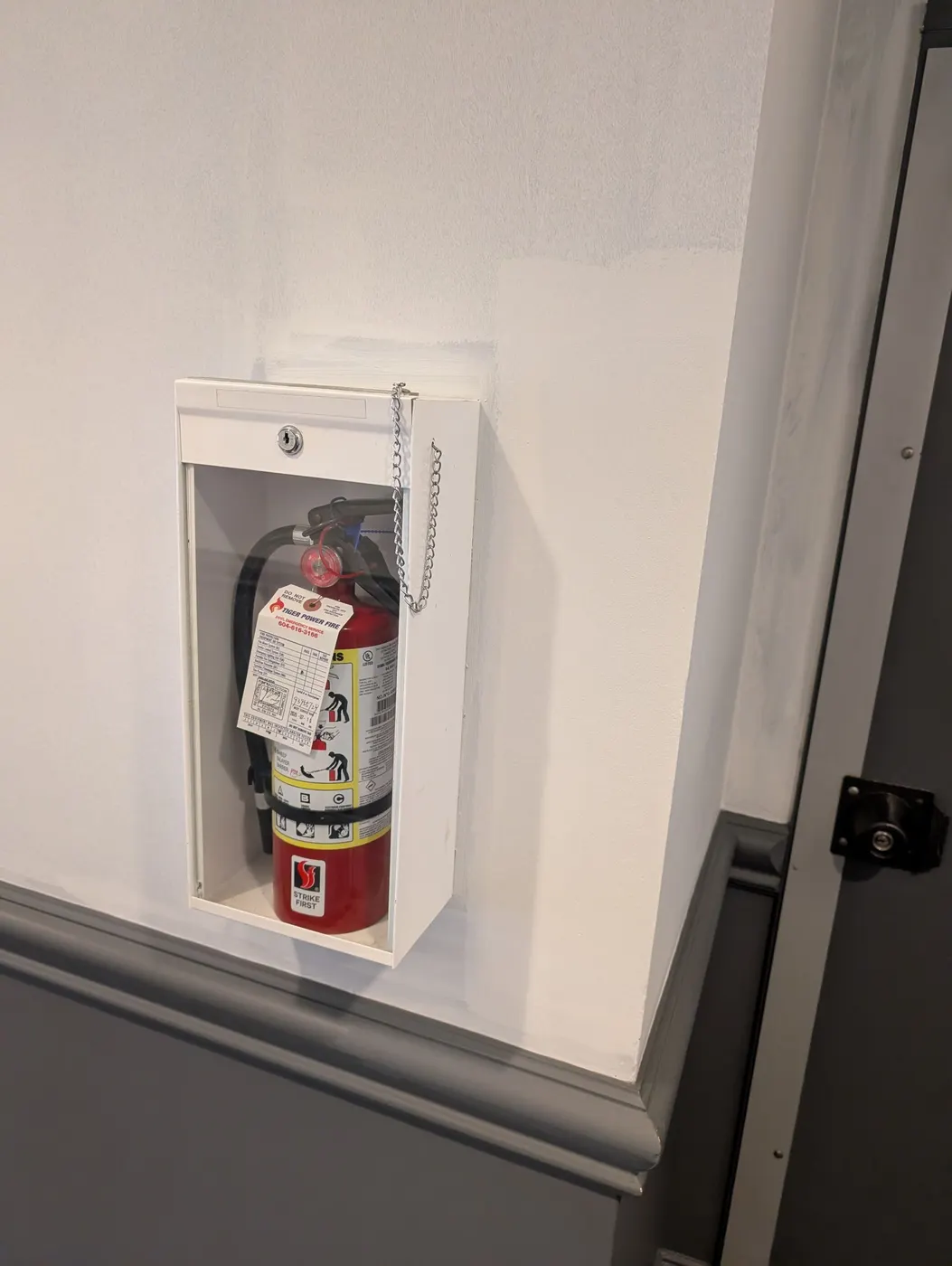
If there’s a deadline, we paint two coats on a small section of wall at the start of the job. If the old colour still shows once the second coat dries, we let the homeowner know a third coat is likely. We usually show them what we’re seeing on the test section, and we plan for the extra time. Sometimes we can do a third coat the same day. More often we do it the next day. If several rooms need it, that can change the schedule for the whole job.
What our quote says about extra coats
Any dark existing colour gets my attention at an estimate, especially a strong blue or green. If you’ve picked your new colour, we can discuss what that change is likely to take. If you’re still deciding, I quote for two finish coats and explain that going very light or white could take a third.
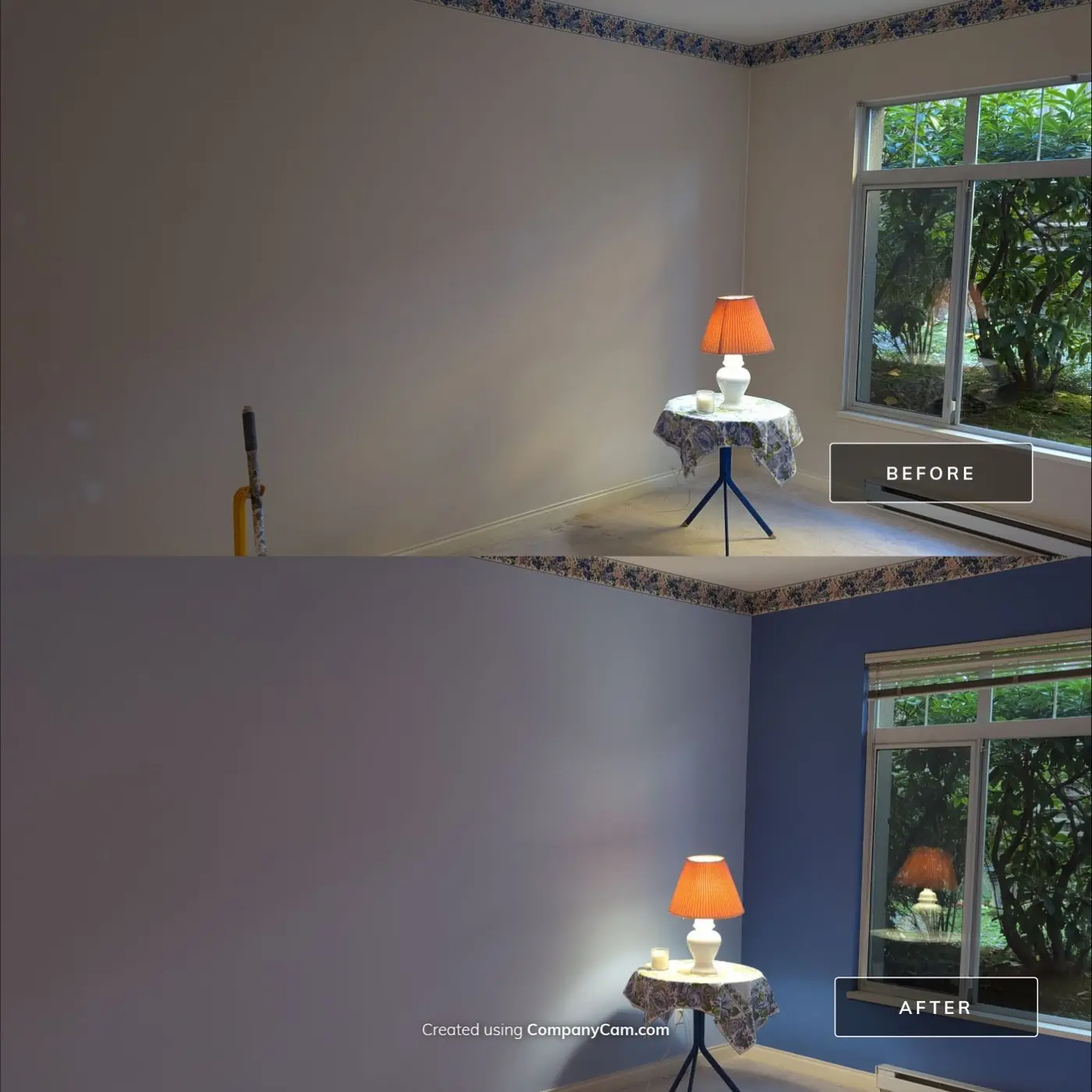
I put it in writing that coats beyond two are extra. If we find that a third coat is needed, I tell you which walls need it and give you a price for that work before we go ahead. You can read more about how we scope a job in our painting process.
Questions homeowners ask
Does primer count as one of the two coats?
When a quote says two finish coats, it means two coats of your chosen wall paint. If the wall also needs a coat of primer, the estimate should list that separately. A primer coat followed by two finish coats makes three applications in all.
Can a paint and primer in one cover dark walls in two coats?
Possibly. A self-priming paint can go directly onto suitable surfaces. For hiding on an already painted wall, it often behaves much like a conventional finish paint. Whether two coats will hide the old colour depends on the paint’s formula and the exact colours you’re going between.
Sources: Benjamin Moore’s paint FAQ
How can I tell if I’m seeing the old colour or a difference in sheen?
If a patch looks shinier or duller as you move around the room, you may be seeing uneven sheen, which painters call flashing. If you can make out the old colour through the dry paint, that points to a hiding issue.
Sources: Sherwin-Williams on paint flashing
How long do you wait between coats?
We go by the recoat time for the paint we’re using. Paint can feel dry to the touch before it’s ready for the next coat.
Sources: Benjamin Moore’s room painting guide
For a homeowner’s perspective on working with us, see our client reviews.
Planning a colour change? Explore our Vancouver interior painting service or ask us for a written quote, or call 604-670-3353.