Table of Contents
When the vinyl took the drywall paper with it
One of the toughest removals I’ve done was in an open-plan office. Heavy commercial vinyl covered the walls, including the short partitions. When we pulled it off, it took large areas of the drywall’s paper surface with it. My guess is that the vinyl had been glued straight onto unsealed drywall.
We cut back the torn paper edges and primed the affected walls. Then we smoothed the damaged areas with drywall compound and applied another coat of primer over the finished repairs.
How we assess wall repairs after wallpaper removal
Test an edge first
I start by slipping a putty knife under an edge and lifting it carefully. Sometimes the whole sheet peels away. If the top layer comes off and leaves backing behind, we apply wallpaper paste remover to loosen the backing. If the top layer stays put, we lightly run a scoring tool over it. The little wheels make pinholes so the remover can reach the glue. See Behr Canada’s wallpaper removal guide.
Wash off the paste
Once the paper is down, we use an enzyme-based remover to soften any paste still on the wall. We wipe it away with a sponge or gently scrape off thicker spots. Then we rinse with clean water and change the bucket water as it picks up glue. Sometimes it takes a second pass. Zinsser calls for warm water when mixing its DIF Liquid Concentrate Wallpaper Stripper.
Match the repair to what’s underneath
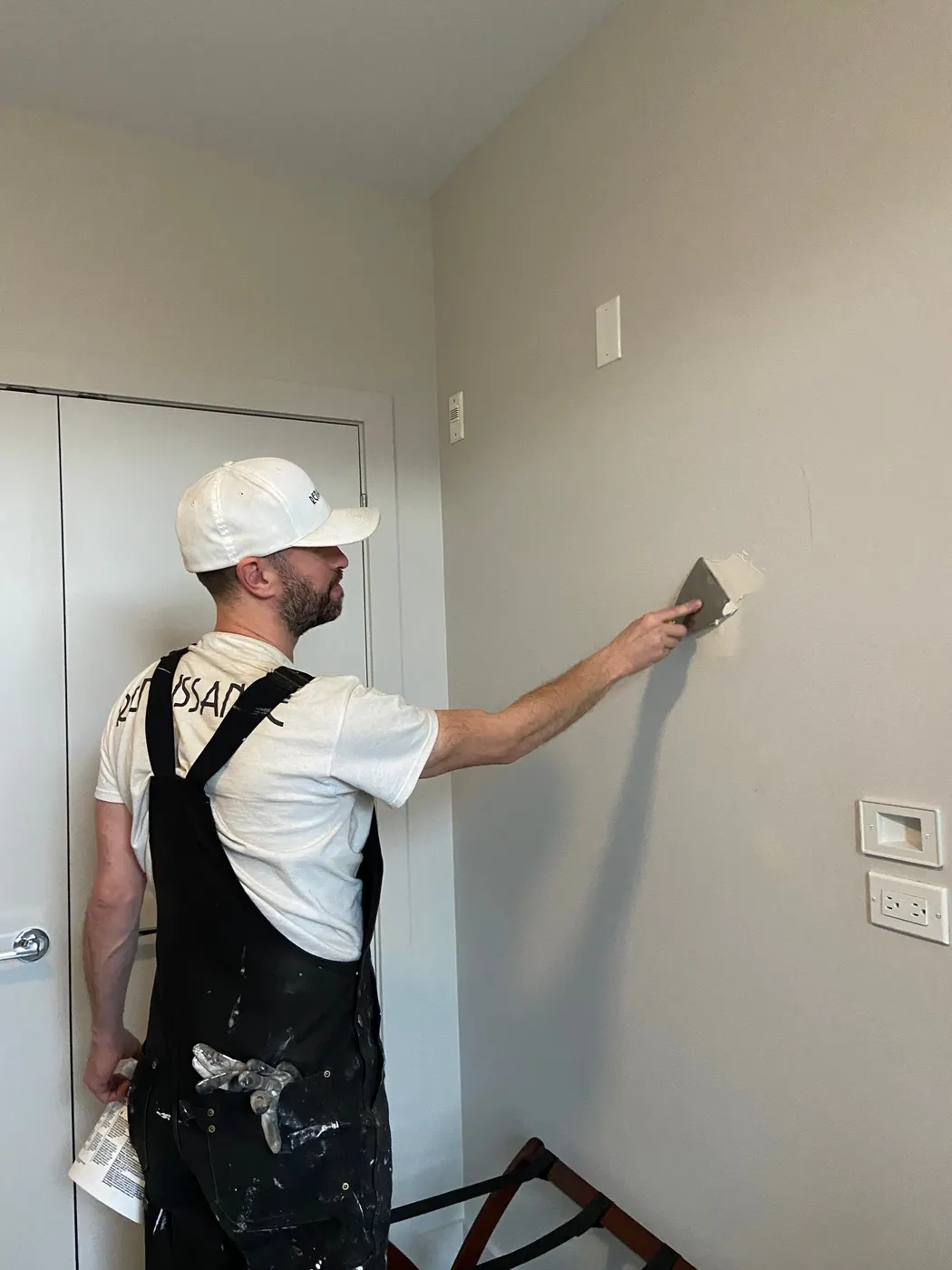
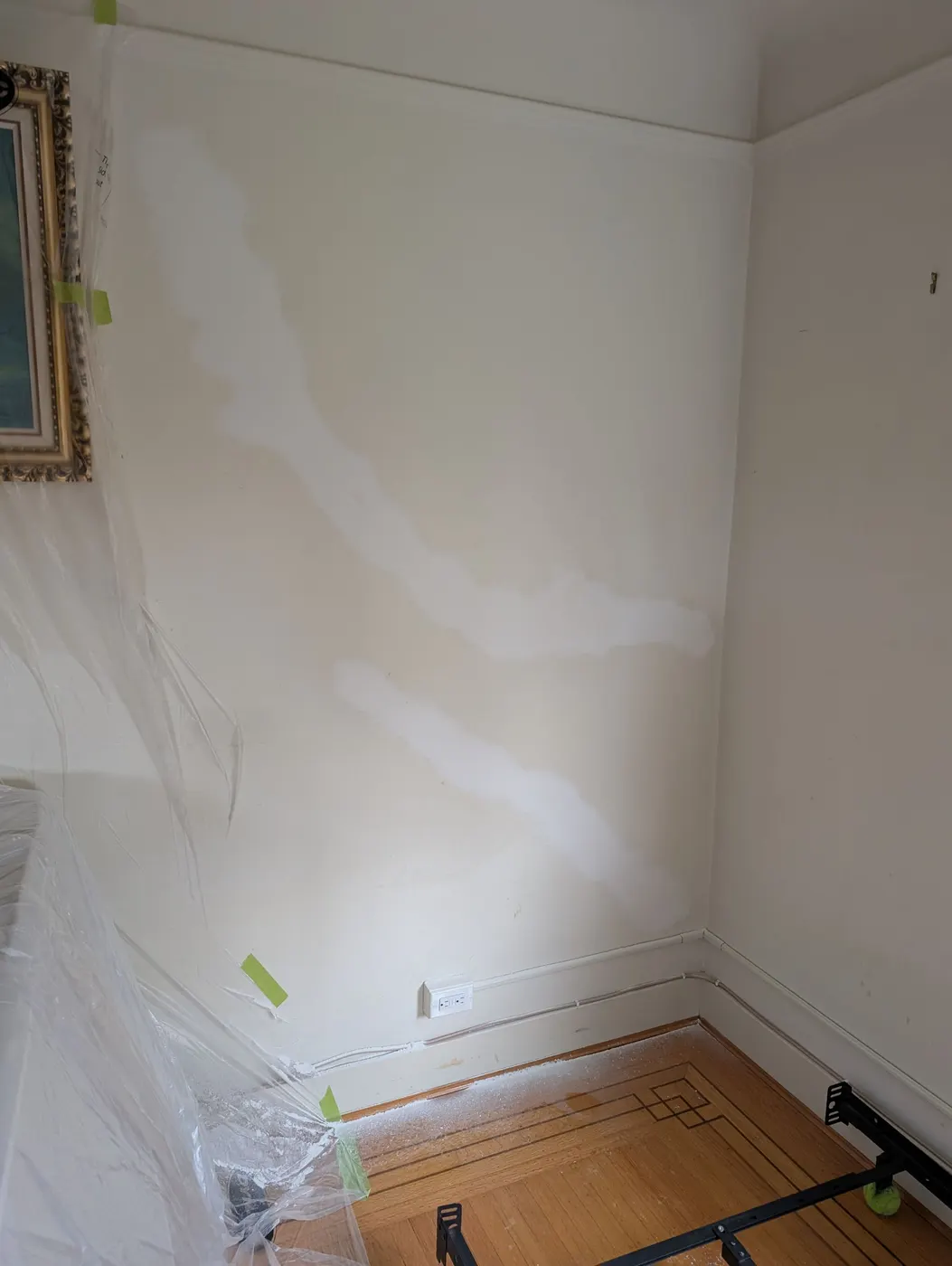
Once the wall is clean and dry, we can see what needs filling. A smooth, sound wall can go straight to paint prep. We patch isolated nicks individually. If the scoring tool left pinholes across a larger area, we can fill them with a skim coat. That’s a very thin layer of drywall compound. We can roll it on and draw a wide drywall knife across it, taking off most of the compound and leaving just enough to fill the marks.
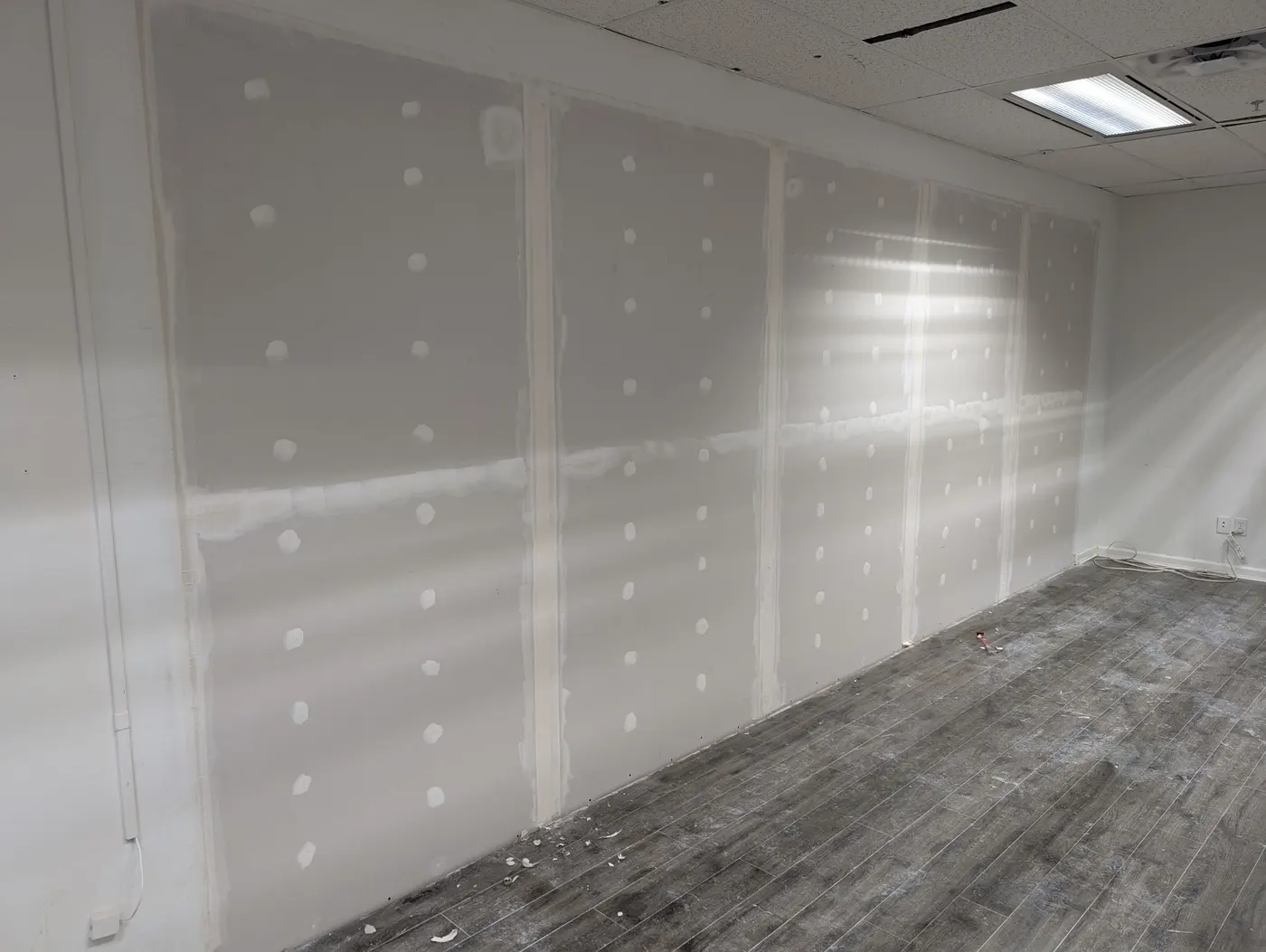
If a stubborn patch of adhesive left a ridge, we deal with the raised glue before skimming. Sometimes a dry deposit sands away cleanly. Once the surface is sound, a skim coat can blend the rough area into the surrounding wall.
For torn drywall paper, we cut back loose edges and spot-prime the exposed paper with a primer suited to that surface. Then we fill and blend the patch with thin coats of compound. Once the repair is dry, we sand it smooth and prime it. If the drywall board itself is badly damaged, we may have to replace a section. That’s rare on our residential jobs.
How wall repairs affect the quote
When we can’t tell how easily the wallpaper will come off, we may quote the removal by the hour. That covers setup, stripping the wallpaper, washing off the paste, routine preparation for paint and cleanup. Wallpaper that peels off in sheets takes less handling than wallpaper we have to loosen a section at a time.
If the paper comes down and we find damage that needs extra repair, we explain what we found and discuss the work with you before going ahead. We usually bill those repairs by the hour, too. Read more about how we plan and carry out a painting project.
What to look for in a written quote
Before you compare prices, ask each contractor to spell out the work in writing. One quote may cover stripping the wallpaper. Another may cover everything through the final coat of paint.
- Does removal include the backing and old paste?
- Which repairs are included, and how will extra work be discussed and priced?
- Will the walls be left stripped, repaired, primed or painted?
- If painting is included, which surfaces will be painted and what colour is specified?
- How will the crew protect the room and clean up?
If the quote says the walls will be “fully prepared,” ask what that includes for your walls. For a sense of how a crew handles prep and communication, read reviews from our painting clients.
Questions homeowners ask
How can I tell wallpaper backing from torn drywall paper?
Backing is part of the old wallcovering and sits on top of the wall. Torn drywall paper is part of the board itself. It can leave a ragged patch with white gypsum showing underneath.
Can I paint over a little leftover paste?
Remove raised glue deposits before priming. If traces of paste remain after cleanup, use a primer made to seal wallpaper adhesive. INSL-X Prime Lock Plus is an oil-based example in Benjamin Moore’s wallpaper removal guide.
Can you paint the same day the wallpaper comes down?
It depends on how much washing and repair work the wall needs. The wall has to dry after washing. Compound also has to dry before sanding and priming, so a repair that takes several coats can add another visit.
What if the wall is damp or soft underneath?
Have the wall checked before patching or painting. If there’s an ongoing moisture problem, deal with the source first. See Health Canada’s renovation guidance.
For help with your walls, see our Vancouver wallpaper removal services or ask us for a written quote, or call 604-670-3353.