Short answer: on most Vancouver houses we brush and roll, and spray only where it clearly pays - large stucco walls, deeply textured shingles, soffits. Spraying is faster to apply but slower to set up, and on tight city lots the masking and overspray risk often cancel the time saved. Whatever goes on with a sprayer should be back-rolled or back-brushed.
Table of Contents
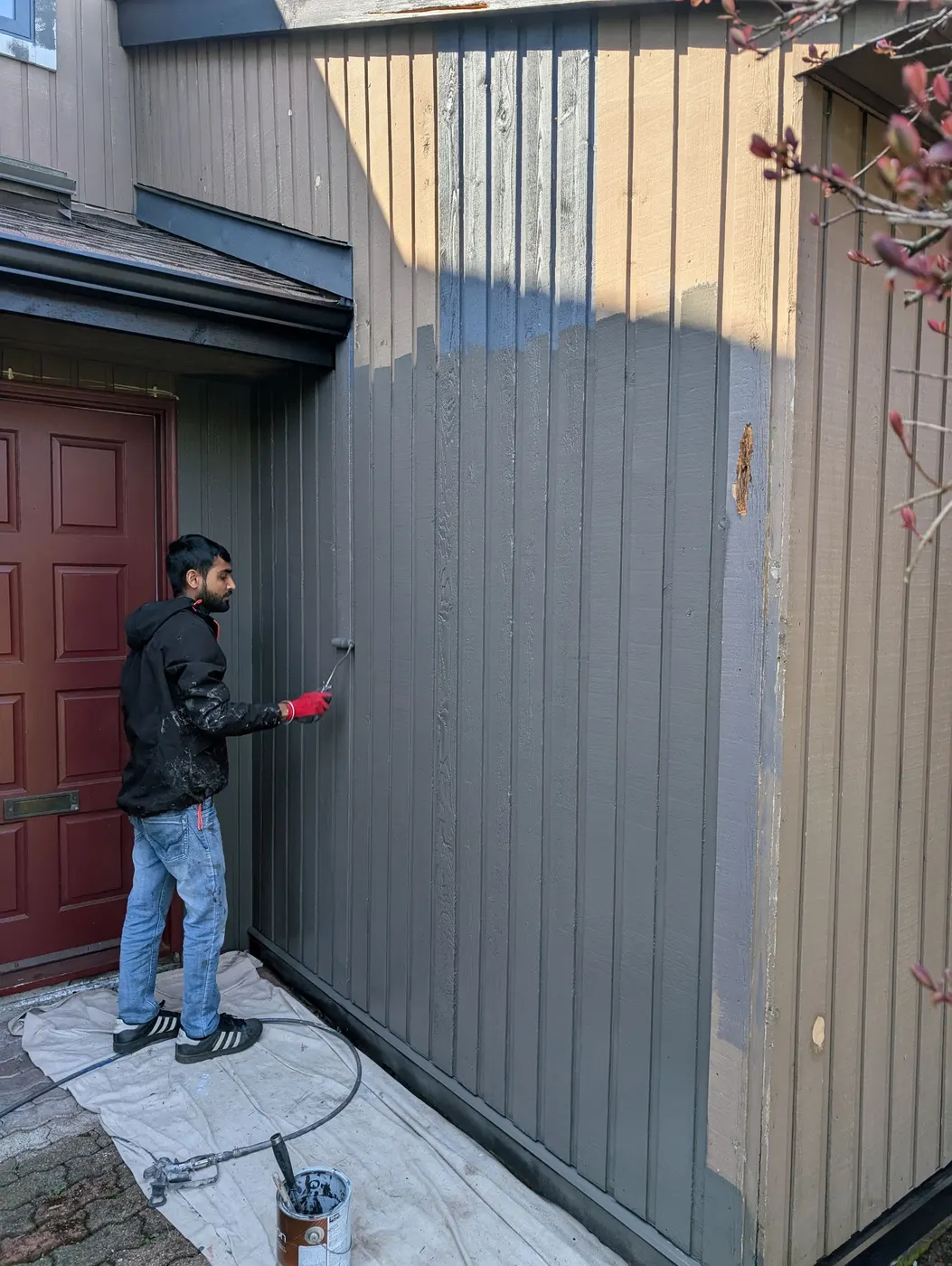
How spraying and rolling compare
- Speed of application: spraying wins, by a lot, on big open walls.
- Setup: rolling wins. A sprayer needs every window, door, fixture, deck and plant covered. On a house with lots of trim, masking can take longer than painting.
- Film build and bond: brushing and rolling push paint into the surface. Sprayed paint sits on top unless it is worked in.
- Finish: spraying gives a smoother, more even look on flat surfaces. Rolled siding has a slight texture that most people never notice from the sidewalk.
- Waste: spraying uses more paint - some of it ends up in the air.
Why Vancouver changes the answer
- Tight lots. Many city lots have narrow side yards. The neighbour's house, car and fence are a metre or two away. Overspray drifts.
- Wind. Even a light breeze moves spray. A still morning can turn by noon.
- Strata and duplex jobs. Shared walls, shared driveways, other owners' cars - overspray becomes someone else's problem.
- Lots of trim. Older Vancouver houses have wood windows, fascia, casings, railings and posts on almost every elevation. Those get brushed either way.
When we do spray
- Large stucco walls, where a roller struggles to fill the texture.
- Soffits and the underside of decks - overhead work goes faster and cleaner with a sprayer.
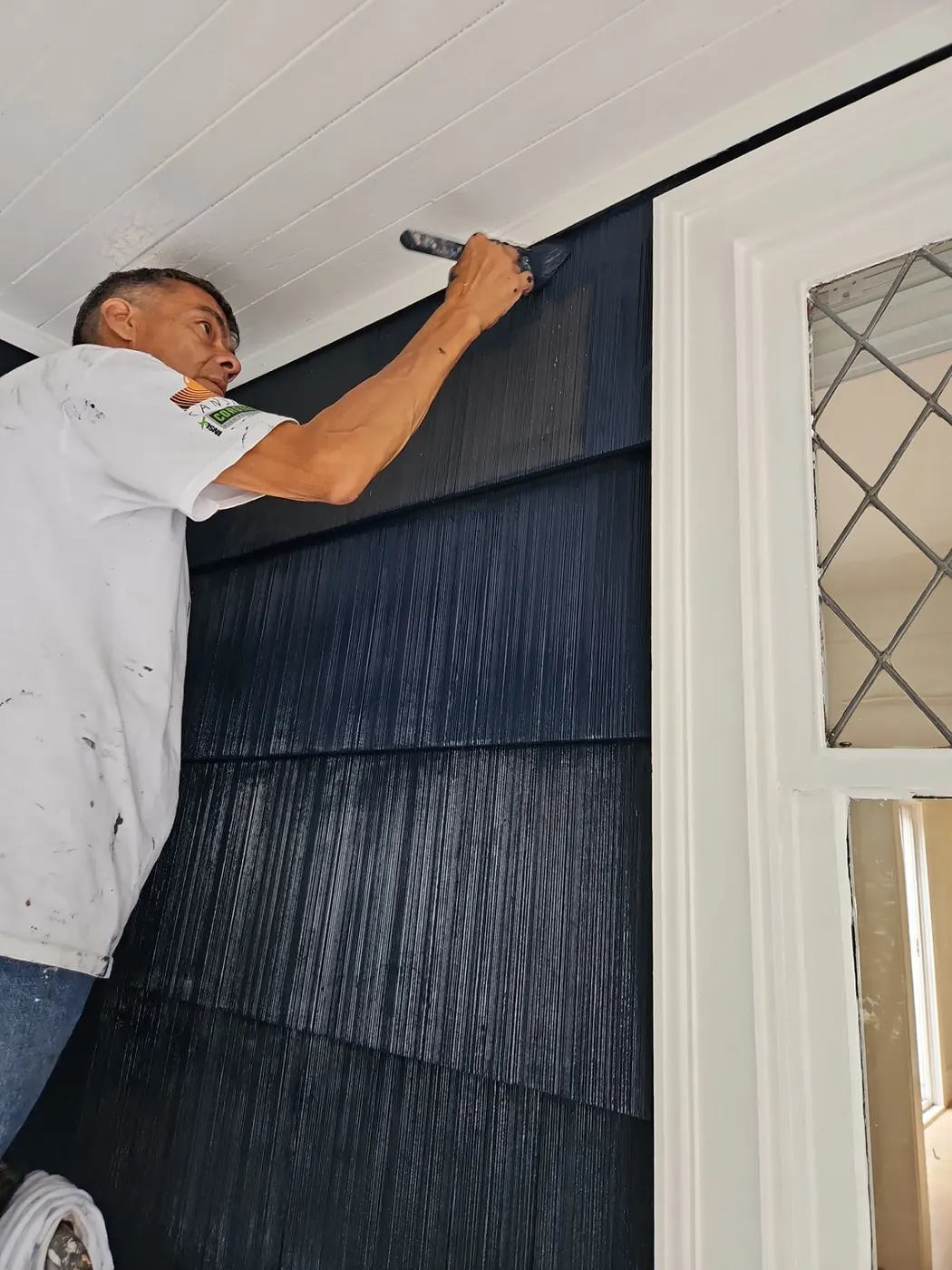
- Cedar shingles, sprayed and then back-brushed so paint gets into the butt ends and gaps.
- Fences and long runs of pickets, with good masking and no wind.
Back-rolling: the part that matters
When we spray siding or stucco, a second painter follows with a roller or brush to work the paint into the surface. That gives the bond of rolling with the speed of spraying. Spray-only jobs often look great on day one and fail first.
What does not change
The prep is identical: wash, dry, scrape, sand, repair, prime, caulk. Two coats either way. Dry wood and a dry forecast either way - most latex should not go on below 10°C. The application method is maybe a fifth of the job; the prep is the rest.
Frequently asked questions
Is spraying cheaper?
Not always. Labour to apply is lower, but masking takes longer and more paint is used. On a trim-heavy Vancouver house the totals often end up similar.
Does sprayed paint last as long?
If it is back-rolled or back-brushed and applied at the right thickness, yes. Thin, spray-only coats usually do not.
Can you spray in the rain?
No more than you can roll in it. The surface has to be dry and rain has to hold off until the paint sets.
Will overspray damage my car?
It can. Ask how your painter will protect vehicles, windows and neighbouring property before work starts.