Table of Contents
Interior door painting cost in Vancouver depends on the condition of the door and what the price includes. Both faces, edges, frames and repairs all affect the scope.
When we quote a standard interior door, we usually include its jamb and casing. Here is how we assess the work, what our typical allowance covers, and what makes a door more expensive.
What we run into: new doors in a 1924 West Point Grey house
We recently painted several interior doors in a West Point Grey house built in 1924. We have worked with the homeowner since 2012.
The homeowner wanted new doors. Heritage-style replacements had been fitted into the existing jambs, and the doors already had a coat of primer.
They still needed preparation. We lightly sanded, wiped them down, masked the hinges and locksets, and applied the finish coats.
We used Benjamin Moore ADVANCE in its Pearl sheen. Benjamin Moore's Canadian ADVANCE listing identifies that finish as K792.
Another primer coat was unnecessary for those doors. We prepared the primer already there and painted over it.
There were several doors, and we were doing other painting in the house as well. The door painting took a couple of days.
How we normally prepare and paint an interior door
Most interior doors stay on their hinges while we paint them. Removing them is unusual for our normal brush-and-roller work.
For a straightforward door in good condition, preparation normally includes:
- Cleaning or wiping down as needed.
- Scuff-sanding the surface and wiping away the dust.
- Carefully masking hinges and locksets, or removing hardware where needed.
- Applying two finish coats.
We use a quality brush and a fine-nap interior roller, often around 5 mm. Panel details and areas around hardware need careful brushwork.
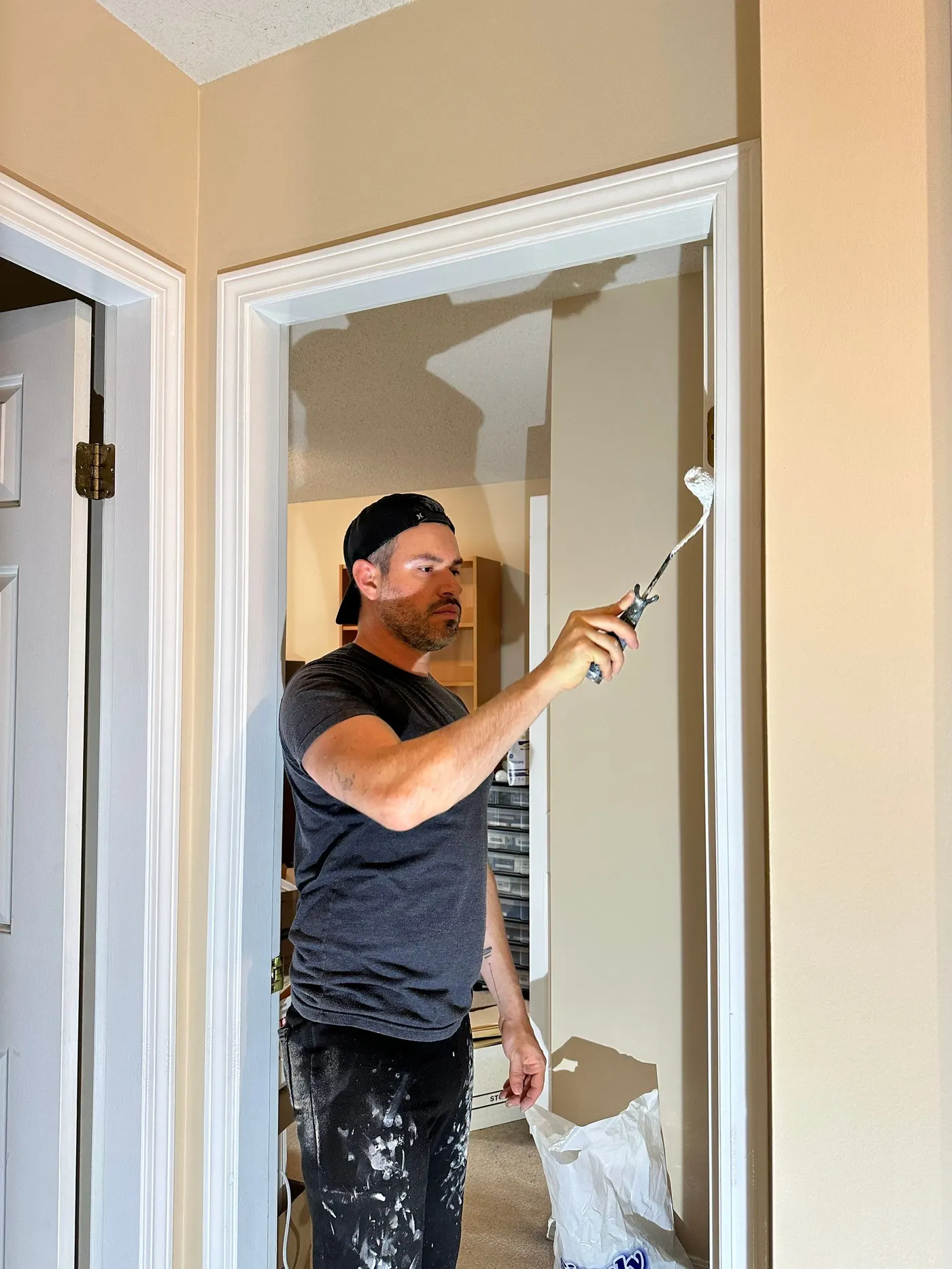
Our usual scope covers both faces and the two vertical edges: the hinge edge and the latch edge. The jamb and casing are normally included in the same colour and product.
If the door and frame need different colours or products, tell us before we quote.
Typical interior door painting cost
For straightforward flat and panelled doors in good condition, our typical allowance is approximately C$225-C$260 per door, plus GST, when the doors are part of a larger interior repaint.
| Situation | Typical price (plus GST) | What it assumes |
|---|---|---|
| Flat door, part of a larger interior repaint | Lower end of C$225-C$260 | Good condition, same colour and product as the frame |
| Panelled door, part of a larger interior repaint | Higher end of C$225-C$260 | More detailed brushwork around the panels |
| One or two doors booked on their own | C$1,050 minimum day rate | Small standalone job |
| Damaged, failing, glazed or varnished doors | Quoted after assessment | Extra preparation beyond the typical allowance |
Flat doors sit toward the lower end of that allowance. Panelled doors involve more detailed work and sit higher.
That allowance includes normal preparation, both faces, the vertical edges, the jamb and casing, and two finish coats. It assumes the door and surrounding trim use the same colour and product.
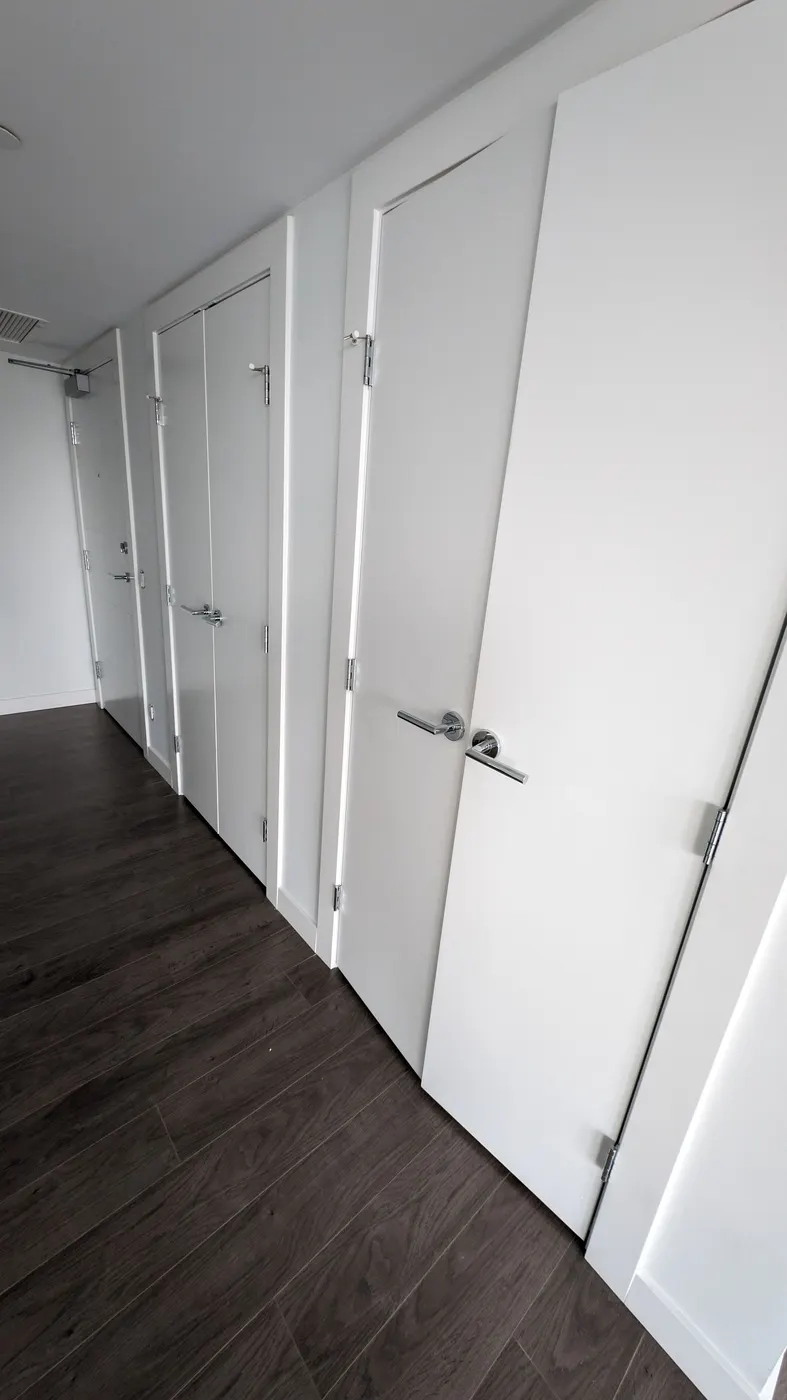
A separate booking for one or two doors is priced differently. For that small standalone job, our minimum day rate is C$1,050, plus GST.
When comparing prices, check whether the figure is an allowance within a larger repaint or the price for a separate booking. Also compare the written scope alongside the painter's process and client reviews. Our pricing page covers how we quote other interior work.
What makes a door cost more to paint?
Scratches and impact damage
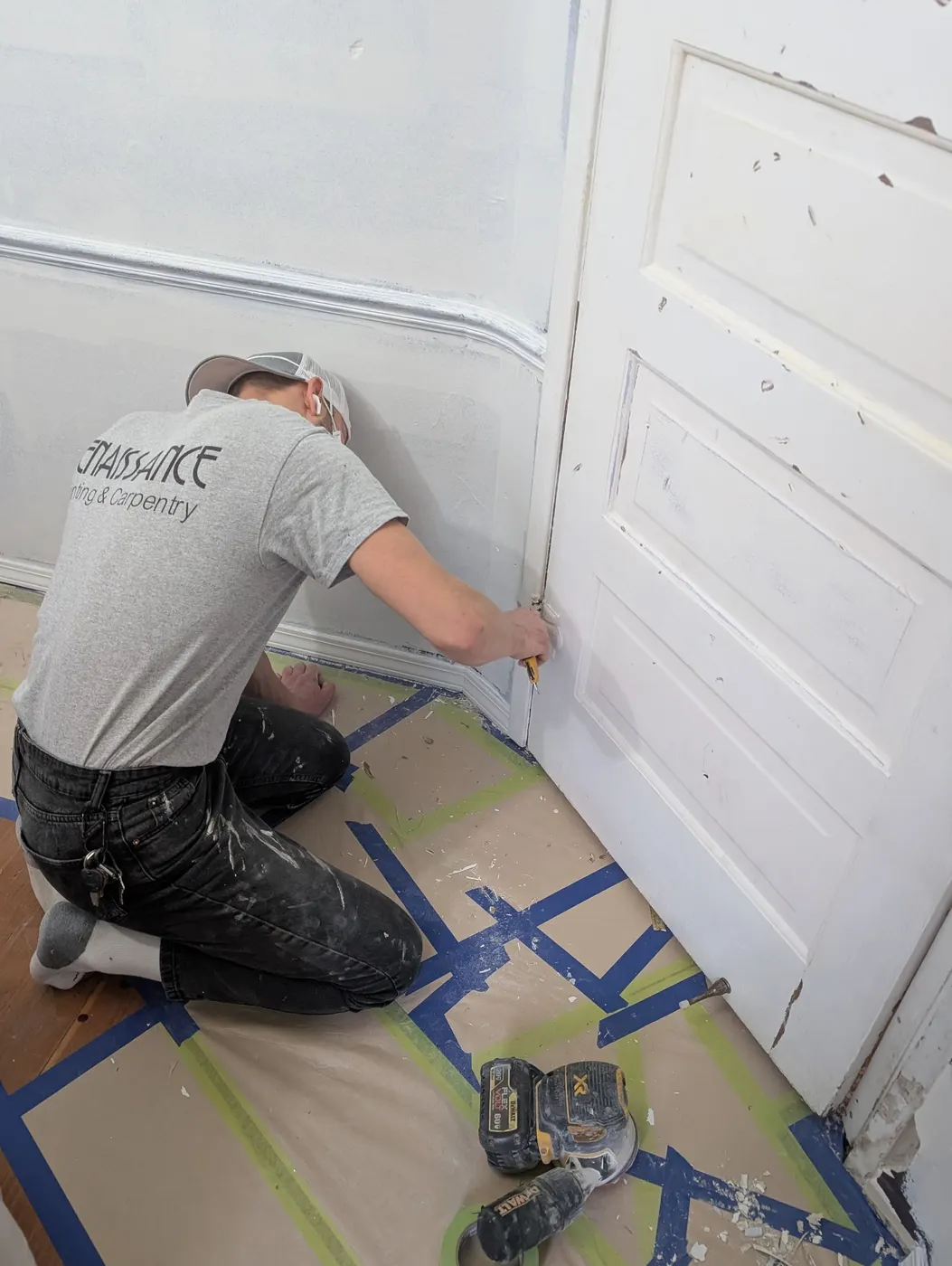
Pet scratches, deep dents and other damage need more preparation than a light scuff-sand. Repairing that damage changes the work we are pricing.
Paint that is not holding properly
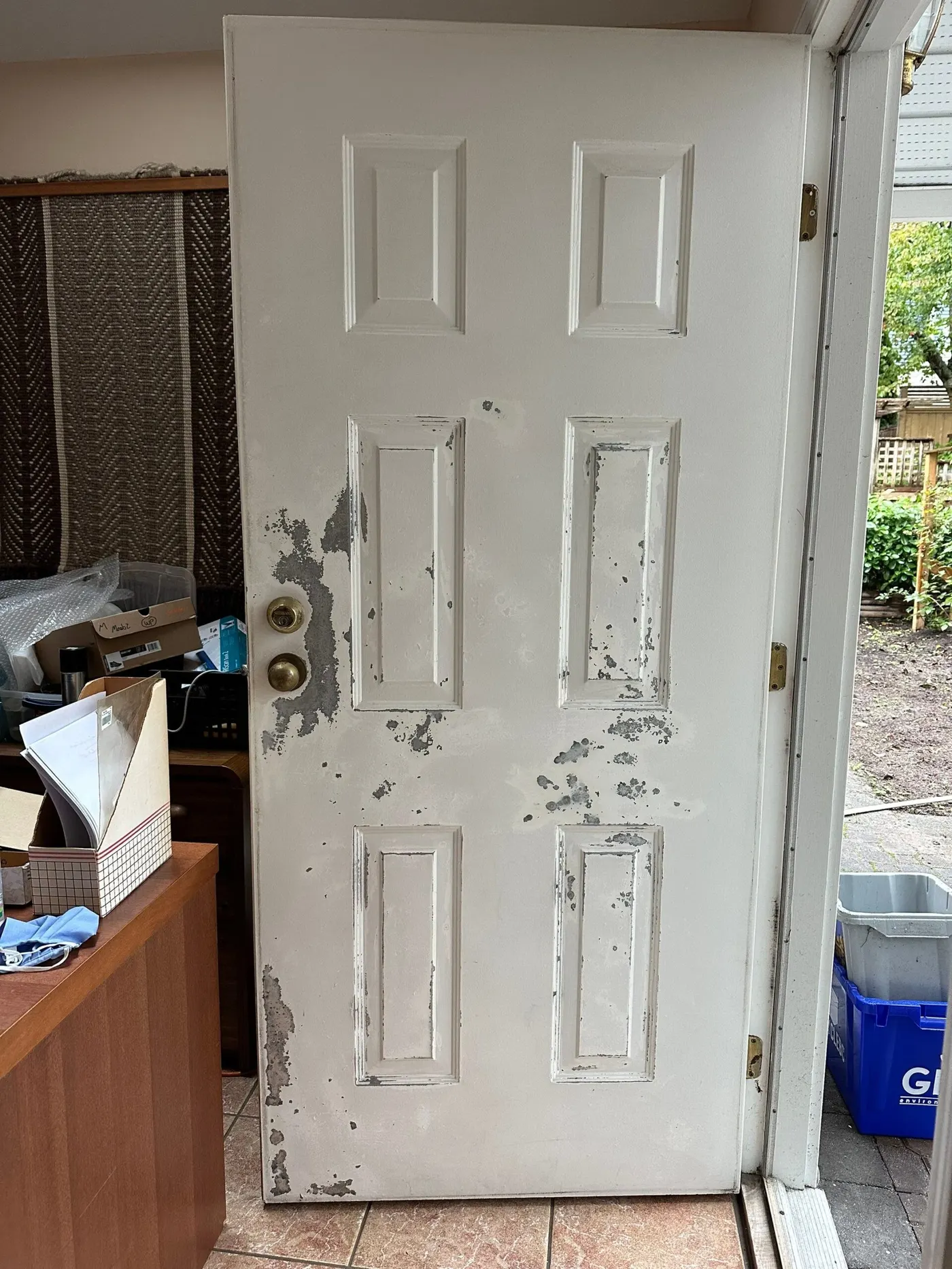
We sometimes find doors where a previous coat scratches off easily, particularly around the handles. One situation we encounter is a water-based coating applied over an older oil-painted surface without adequate preparation or priming.
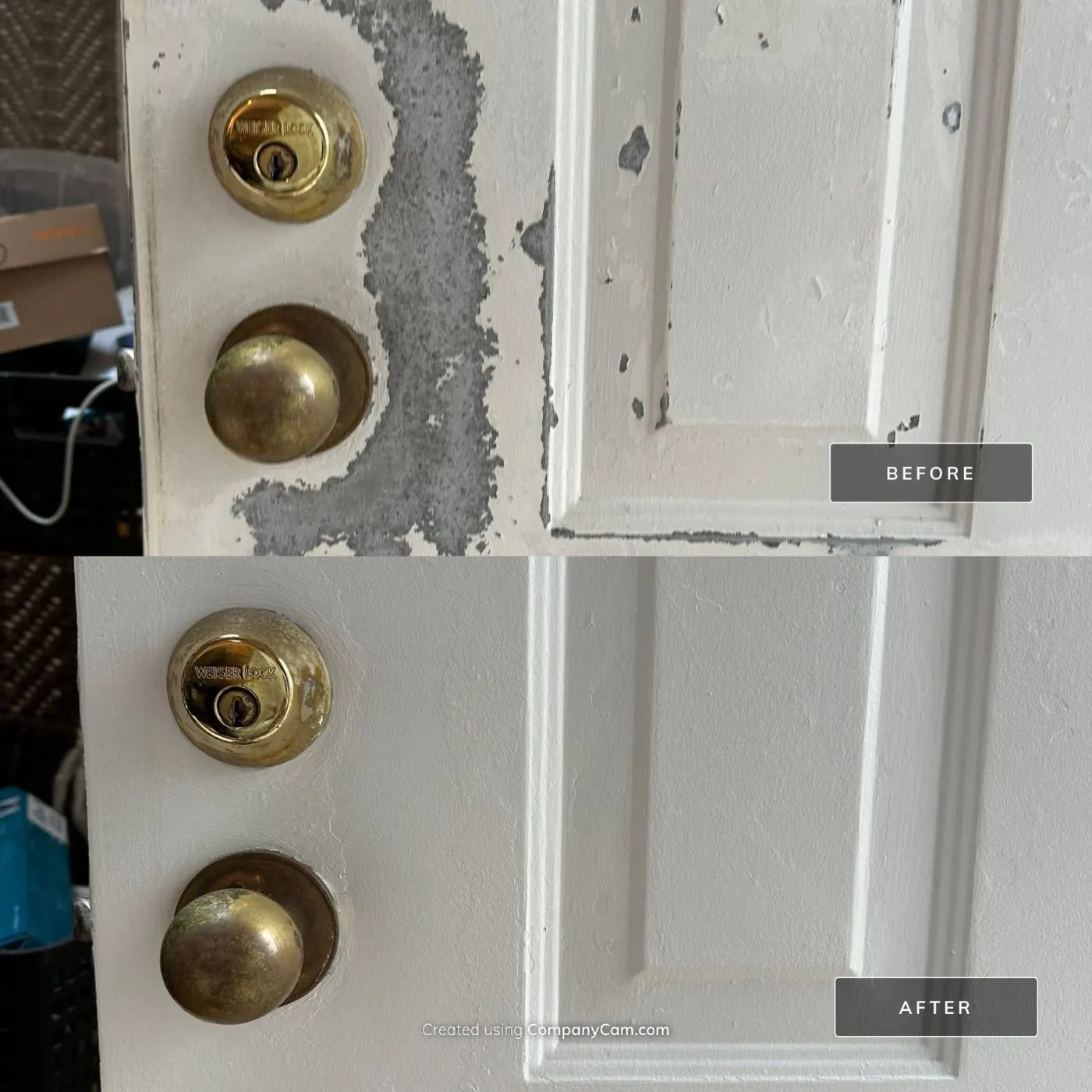
Putting another coat over failing paint does not resolve the underlying adhesion problem.
Depending on the condition, we may need to remove loose coating locally or over a wider area. The remaining surface may need more thorough sanding, deglossing or an appropriate primer.
If we are unsure about a coating's compatibility, we prepare a small test area and apply the intended topcoat. That helps us assess the proposed approach before proceeding.
Panels and glass
A panelled door takes more detailed brushwork than a flat door. Doors with glass also require additional care when cutting in around the glazing.
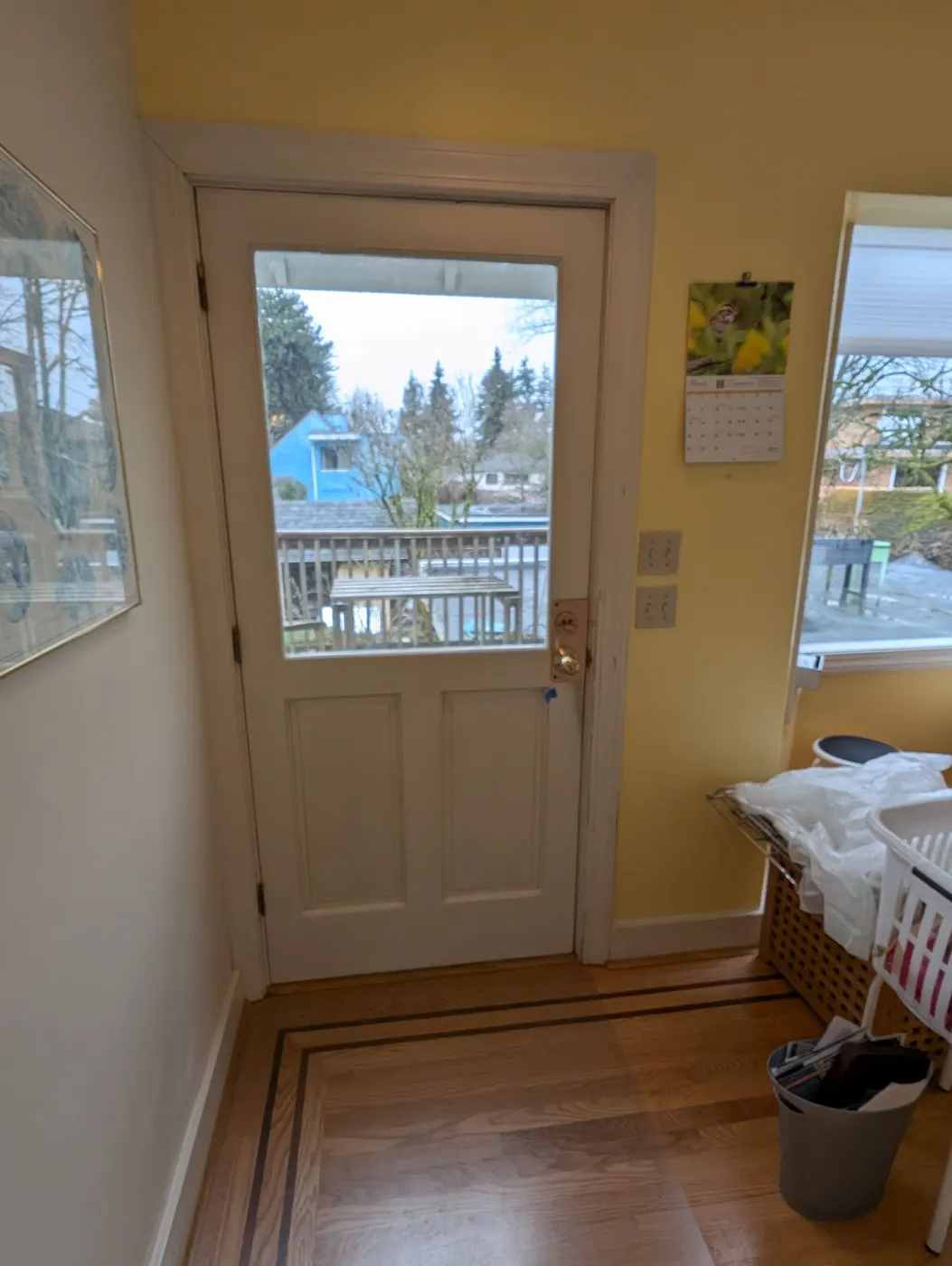
Two doors of the same size can therefore involve different amounts of work.
Older heritage doors and failing varnish
Older heritage doors with intricate trim, insets and detailed panels take more time to prepare and paint. If you own an older home, our guide to heritage house painting in Vancouver covers what else to expect.
If a door is varnished and the varnish is failing, it may need to be completely removed before painting. That can add substantial preparation work and significantly increase the cost beyond our typical allowance for a door in good condition.
Additional preparation or finish coats
An extra primer coat may be appropriate for some surfaces. It was unnecessary on the already-primed West Point Grey doors.
The existing finish and intended coating system determine what is needed. A substantial colour change can also affect coverage. Discuss those choices before the quote is final.
Our quotes are fixed written prices for the stated scope. If the scope changes, we explain the change before proceeding.
Frequently asked questions
How much does it cost to paint an interior door in Vancouver?
For straightforward flat and panelled doors in good condition, our typical allowance is approximately C$225-C$260 per door, plus GST, when the doors are part of a larger interior repaint. That includes both faces, the vertical edges, the jamb and casing, and two finish coats. A separate booking for one or two doors has a minimum day rate of C$1,050, plus GST.
Do new, already-primed doors need another primer coat?
Not automatically. On our West Point Grey project, the existing primer needed normal preparation before the finish coats, and another full primer coat was unnecessary. Bare areas, damaged primer or a different coating system may require a different approach.
Why can two coats take more than one day?
Drying and recoating depend on the paint and conditions. For Benjamin Moore ADVANCE Pearl K792, the Canadian technical data sheet lists a 16-hour recoat time at 25°C and 50% relative humidity. Cooler or more humid conditions extend drying times, and full hardness and adhesion develop over time.
Do you have to remove the door to paint it?
Usually not. We paint most interior doors while they are hanging. When we occasionally spray doors, we generally remove them and set them up for spraying, which is an exception to our usual approach.
Can you paint only one side of a door?
Yes, although that is uncommon in our work. The quote should specify which face, edges and surrounding trim are included.
What if the door has very old paint?
Older coatings need assessment before preparation. Health Canada advises checking for possible lead in older paint and warns against sanding, scraping or burning off leaded coatings because of harmful dust. That assessment can change the preparation method and scope.
The ADVANCE recoat figure comes from Benjamin Moore's Canadian technical data sheet, and the lead guidance from Health Canada.
Tell us which doors and areas you need painted so the scope is clear, or call 604-670-3353. For doors, frames and preparation in one quote, see our door painting services in Vancouver.