
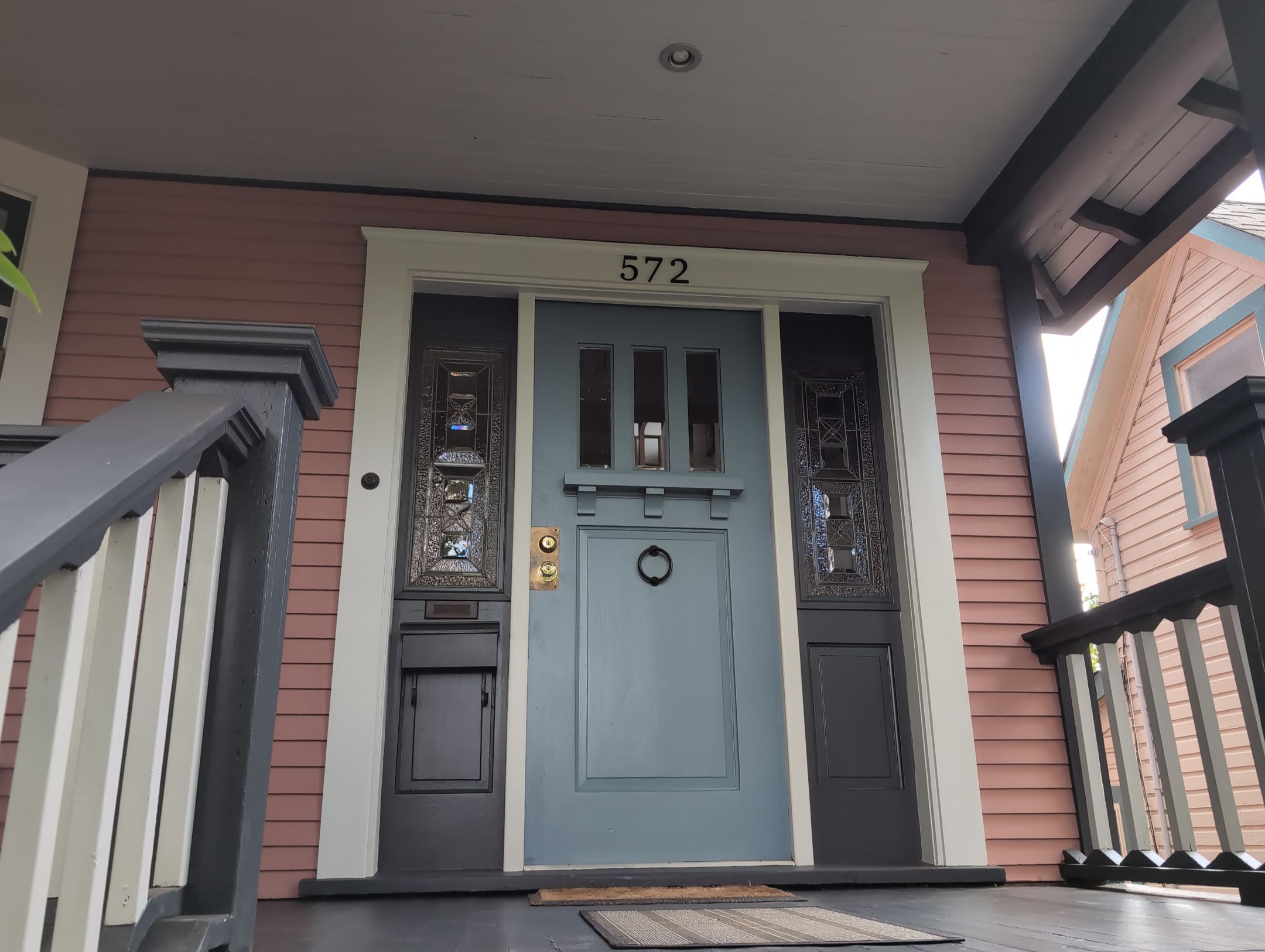
Painting Contractors: How to make the right choice PART 2

Part 2 of “Painting Contractors: How to make the right choice”.

Is the Contractor Insured and Licensed?

In my previous blog post, “Painting Contractors: How to make the right choice“, I covered some of the tips and tricks from my booklet, CONTRACTOR SECRETS REVEALED  In this post I’ll cover a few more tips designed to protect you and save you money.

Once you’ve confirmed that the contractor’s business is well established (he has a permanent address and a healthy attitude toward his own appearance and the appearance of his business and vehicle) the next step is to confirm that the contractor carries insurance, is licensed and is a member of a trade association.

Unfortunately I hear too many stories of homeowners who have been financially harmed by uninsured (or inadequately insured) contractors.  A contractor should be able to provide you with a Certificate of Insurance for Comprehensive Liability and Worker’s Compensation that will ultimately protect you in the event of an accident, or to provide coverage for a failed project.  

I hate to be the one to break this to you, but in the event of such a calamity, Mike Holmes isn’t going to jump out from behind a bush to offer you his help.  You have to ensure that you are covered from the get-go.  If you are serious about hiring someone to paint your home, ask to see the insurance policy, then check the dates to make sure that it’s current!

Next, ask the contractor for his Safety Plan, then check with the Worker’s Compensation Board to confirm that it is valid.  If you go to their website, www.worksafebc.com,  you can get a clearance letter for your contractor.

The next order of business? 

Although I advise anyone to reject an unlicensed contractor, I have to admit that license requirements in Vancouver are minimal and poorly enforced.  So a better way to test the contractor’s commitment to his trade is to see if he is a member of a trade association.  Simply call the association and find out if he is a registered member and if he is taking any continuing education training.  Here are some local professional trade associations:


Painters            PDCA             http://www.pdca.org/ 

Roofers            RCABC            http://www.rcabc.org/ 

Renovations   GVHBA         http://www.gvhba.org/ 

Remember: if you ask a contractor if he carries insurance, is licensed and/or is a member of a trade association and he blows off your questions as being unimportant - blow him off!  If he deems your questions as being unimportant, he will likely consider your satisfaction as being unimportant too. You want a professional.


Painting Contractors: How to make the right choice

When selecting a good Vancouver home painter, the first thing you need to do is: ensure the contractor is well established.

I’ve recently put together a FREE REPORT called Contractor Secrets Revealed that outlines what a person should be looking for in a good contractor. It gives numerous tips and tricks designed to increase your awareness, confidence, and save you money. I’ll be covering some of these tips over the next few blog posts, but if you would like the entire report as a valuable reference, please click on the link.

The first step in selecting a good contractor for home painting or home improvement is to ensure he is well established. How do you do that? First, check to see if he has a permanent place of business.   Let your fingers do the walking. If a contractor has an established business he’ll have his company listed in the big yellow book. He may have an advertisement with a logo, or at the very least he’ll have a number and address listed. Either way, if you find the business listed, you’re off to a good start.

Another place to look is online. Check 411.ca or Canpages.ca. If you only have a number to work with, and no address, Canada411.ca  offers a reverse lookup, so you just enter the telephone number and the site will search for the name and address related to it. Of course, nowadays many contractors avoid the Yellow Pages, as it is costly and does not provide good results.  So if you don’t find them in there, take it with a grain of salt.

An excellent way to gather information on a prospective Vancouver house painting contractor is to use Google. Search the company name and the person related to the company. Ask yourself  ”is what I am seeing congruent with what the painter has been saying?” You should get a pretty good feel for how congruent the company is with their online presence.

I can’t stress how important it is to ensure the business has a permanent address. If you have any kind of problem and have only been given a cell number with no address connected to it, how will you find the contractor? If the contractor has collected a deposit, then evaporates into thin air, you’ll have a tough time tracking him down! Knowing the business is permanently established will give you the first shot of confidence needed to promote your interest in this contractor.

Once you’ve learned the address, my next tip is to drive by and have a good look - if it looks like the business has been established for a long time and you see the equipment and manpower to do your project in a professional and timely manner, then you know things are shaping up. Better yet, pay the contractor a visit. A professional will be more than happy to give you a tour of the facilities (and I don’t mean the washroom!). Even if the contractor works out of his home, check to get an idea of how it’s maintained. Is the grass mowed? Is the yard tidy? Don’t feel like you’re being a snoopy, Nosey Parker - this is justifiable research! More often than not, his attitude towards the maintenance of his home will cascade into his attitude toward his work.

The same principal can be applied to the vehicle the contractor drives. Permanent signage indicates a solid, full-time business. But keep looking. If the vehicle is clean, well-maintained and organized, it’s the kind of vehicle you’d expect a successful, financially stable contractor to drive. If it’s dripping oil, has bald tires and a cluttered dashboard, you’ll be getting a different message. This may not be the person you want to paint your home. The care and attention a contractor puts into their work is reflected in their vehicle, place of business, and even in their own appearance.

Now I know that we’re taught not to judge a book by its cover, but in this case you can gain several clues about the contractor. A sloppy vehicle or appearance can mean a lack of pride of ownership or a relaxed attitude toward their work.  If the contractor’s boots look like they took part in Napoleon’s retreat from Moscow…you’ve got a red flag! It may seem petty, but really, if they don’t take care of their shoes, how will they take care of your possessions?

A permanent address and a well-maintained appearance for the business - two very important tips to get you started in your search for a contractor to paint your home. Stay tuned for my next blog post in which I cover even more helpful tips!


House Painting: How to Pick Colors

This week’s blog post features a special guest from Benjamin Moore Paints. Over the years I’ve formed a close business relationship with the design consultants at Benjamin Moore. They have consistently exceeded themselves in helping my clients choose the right colours for their homes, and have made my clients very happy.

For those of you who may not be familiar with the impact colour can have on the palette of your home and your life, I’ve asked Michelle Campbell from Benjamin Moore to be my guest blogger so she can illustrate some of the finer points. Michelle has a very strong background in design and decorating: she studied design at Westervelt College in London, Ontario; has worked extensively with contractors and owns her own painting business, making her an excellent source on the subject of choosing colour for a home. Over to you Michelle!

Thank you Eric. I’m sure we all know at least one person who agonized so much over finding the right colour for a particular room that they ended up painting the same room 3 or 4 times with different hues in the space of one month - only to be mildly satisfied with the final result. In this regard, getting help from a professional design consultant has many benefits: it can not only save you time and effort, it can have a striking effect on your home.

Professionals have a trained eye so they can see different undertones in paint colour (so the warm yellow you want for the kitchen may have a cold undertone, which is what you may not want) and they know how a colour can change from daytime to nighttime. Professionals are also well versed in accessory colours that can be used as a compliment or an accent.

Colour has such a big influence on our lives: yellow can inspire happiness or creativity; oranges can have a warming effect and give you energy; blues are calming while neutrals are clean, refreshing and give a natural, earthy feel to a room.

So the first step in the process of choosing colour for any room in your home is to consider the influences of the colours you love. Think of what you’re attracted to in nature or in your own clothing since it’s important to be surrounded by colours you really like. Once you’ve narrowed down your selection, a professional can then help you choose complimentary colours for additional rooms, creating a flow of colour throughout your home.

The flow of colour is much more important than many people realize. Unfortunately, most people choose paint colours for each room of their home on a one-off basis, and end up with hues that clash as they move from room to room. On the other hand, a professional can help create a canvas of colour that progesses smoothly and naturally throughout the home and the lasting effect is a home that is not only rich in colour, but is comfortable and inviting.

If you’ve been considering making any changes to the colour palette in your home, you can always get started by visiting the Benjamin Moore website. It has a lot of helpful information, but one of my favourite tools is The Personal Colour Viewer which is a colour visualization program that allows you to apply any colour you like to various room images so you can get a preview of what the colour will look like.

Have fun!


Painting Your Home? Why LEED Standards Matter.

What Relevance Do the LEED Standards Have With Painting My Home?

In part 1 and 2 of my series about LEED standards (Leadership in Energy and Environmental Design) I’ve covered what the standards are; how they’ve been adopted and implemented by the city of Vancouver; and how they help reduce the carbon footprint left by builders and owners.

For this post I’m going to cover how the LEED standards are relevant to the average homeowner thanks to the long-term benefits that they offer: reduced waste and emissions, tax incentives and increased property values.

LEED Canada standards were adopted from the U.S. and tailored for Canadian climates, construction practices and regulations. We already know that LEED is a rating system that promotes the design and construction of green buildings that use less energy and water, create less waste, and are healthier for those working and living in them. For someone with a LEED-designed home, this translates to lower energy bills, reduced greenhouse gas emissions and less exposure to mould and other indoor toxins.

Okay, so who doesn’t want to pay less when it comes to paying their bills? If this isn’t motivation enough, there is a second reason for building a LEED-designed home or retro-fitting their current home: tax incentives. That’s right, the Federal Conservatives have an ecoEnergy Retrofit programme that offers up to $5,000 in tax rebates.

Yet another pot sweetener for going green with your home is how it can increase the value. Last year, stats collected by Seattle-based Northwest Multiple Listing Service (NWMLS) revealed that green homes certified by a third party sold for a 10.55% premium on a square foot basis.

Simon Baston is CEO and founder of Leading Homes, a company that develops high-end green buildings on Vancouver’s North Shore. His passion for developing buildings that are eco-conscious and sustainable began in his native Wales and ultimately brought him to Vancouver, where Leading Homes is currently putting the final touches on B.C.’s first LEED-certified gold home. Baston says that this project in particular has taught him that “you can build high performance homes that significantly lower your carbon footprint, are massively energy efficient and sustainable.”

So what relevance do the LEED standards have with painting your home? As I strive to make Renaissance Painting practices more eco-conscious, I’m hoping that by sharing this information I will have planted a seed, and one day we will all be striving to make our homes and lifestyles much more eco-conscious.

For more information on LEED standards and certified homes, please visit the following links:

1.Canada Green Building Council
2.Leading Homes
3.Tax Incentives (Government of Canada Natural Resources site)
4.Light House


House Painting the Environmentally Friendly way

“The Silver Lining” in house painting: paints that don’t damage you or the environment

Have you noticed that prolonged exposure to a freshly painted room doesn’t give you a headache like it used to 10 or 15 years ago? It’s not your imagination or random luck: it’s the reduction of Volatile Organic Compounds (VOCs) in paints by almost 50%. Before I launch into a definition of the term for those not familiar with it, I just want to point out that I purposely titled this blog post The Silver Lining because I really want to convey the positive achievements that have been made with standards surrounding VOCs. And let’s be honest: it sounds much better than Everything You Wanted to Know About VOCs…But Were Afraid to Ask.

VOCs are organic compounds containing one or more carbon atoms that have high vapor pressure and evaporate readily into the atmosphere. Okay, that’s the Poindexter definition. In layman’s terms, VOCs are gases that are emitted from certain solids or liquids and include a variety of chemicals that may have short- and long-term adverse health effects. If this sounds a little gloomy, please bear with me. I promise there is a light at the end of the tunnel, and it’s not a train.

VOC emissions can result from natural sources, like vegetation, forest fires and animals (darn those flatulent cows) and they can result from man-made sources, like exhaust fumes, pollution, office equipment (copiers, correction fluid, glues) dry-cleaned clothing, and yes, even paints.

The short-term adverse health effects that result from exposure to VOCs include eye, nose and throat irritation, headaches and nausea. The long-term effects are much more serious: loss of coordination, damage to the liver, kidneys and central nervous system.

Repeat after me: silver lining. Yes, before you lacquer your hair with product, print off a map to your nearest dry cleaner then run screaming into the street when you consider the amount of VOCs you’ve just exposed yourself to, consider this: in June 2000 the Canadian government adopted the “Canada Wide Standards for Particulate Matter and Ozone.”  These standards outlined a number of actions to achieve reductions of several air pollutants. The Ministers of Environment and Health are also currently working on measures to be implemented by 2010 that will reduce emissions of VOCs from consumer and commercial products.

Are you already feeling better about picking up your dry cleaning with crunchy hair? Well, there’s even more good news, and this pertains to paints, which is obviously near and dear to my heart. In the early 1990’s it was decided that the best way to reduce VOC emissions in paints was to reformulate them. The Canadian government created a task force to reduce VOC emissions in paints by 20% and this was achieved by 1994 and acknowledged by the Canadian Paint and Coatings Association. Seeing that they were on a roll, the task force kept at it and by 2002 a further 24% reduction of VOCs in paints had been achieved. Not too shabby. That’s definitely a silver lining if you ask me.

Despite the reduction of VOCs in household products and paints, you should still take precautions: be sure to increase ventilation in an indoor space when using products containing VOCs. Throw away unused or little-used containers safely, and buy products in quantities that you’ll use soon so you don’t expose yourself to VOCs that are emitted slowly.


Leadership in Energy and Environmental Design (LEED) Part 2

Happy New Year! I trust you all had a safe and very happy holiday, with just enough shoveling to work off the extra pounds garnered from indulging in sweets and spirits.

My first blog post of 2009 is part 2 of a 3-part series on LEED (Leadership in Energy and Environmental Design Standards). In part 1 I explained that LEED is a building certification system developed by the U.S. Green Building Council, and awards points in categories like sustainability of the site, water efficiency, energy and atmosphere, materials and resources, and indoor environmental quality. The system rates buildings on a scale that ranges from certified, to silver and gold. The ultimate intention of the LEED rating system is to develop buildings that use less energy, water and materials, minimize waste and emissions and use of toxic materials. So basically, a green building is designed, constructed and operated to reduce its overall environmental impact and increase occupant well being.

I mentioned in Part 1 that British Columbia was the first Canadian province to adopt the LEED standards and Vancouver now requires that all civic buildings bigger than 500 square metres be designed to earn a LEED-BC gold rating - the highest energy efficiency rating available. As of June 2008, the city council approved the adoption of the highest green standards for private sector development in North America. This means that all new re-zonings for development in Vancouver must achieve or exceed the level of LEED silver, and after January 1, 2010, they must achieve LEED gold.

If you think that all of this seems relatively detached from the subjective details of your daily life, you might be surprised to learn of just a few of the buildings that have already reached LEED standards in Vancouver. In 2004 The National Works Yard (just north of the Via Rail Station at Main and Terminal) became Vancouver’s first LEED-rated facility. The buildings on the site feature a ground-source heat pump and a radiant panel system that heats and cools 2 of the buildings. There are other features that will help reduce energy use by up to 55 per cent over traditional buildings. In 2006 The Vancouver Port Authority won LEED-CI (Commercial Interiors) Gold certification for its offices at Canada Place, one of the first pilot projects in the world for the new certification. In spring 2007, the VANOC  (Vancouver Olympic Committee) Campus 2010 high-rise building received LEED Gold certification. The B.C. Cancer Research Centre is also a LEED Gold building, and The Cultch (the Vancouver East Cultural Centre), which is currently being renovated, will be one of the first LEED-certified arts centres in Canada.

In the private sector, a West Vancouver Real Estate company is now offering LEED-certified luxury homes that offer energy efficiencies, use non-toxic building materials, are water smart and respect the environment in which they are constructed.

As I mentioned in Part 1 of my blog LEED series, I am doing my best to adhere to the LEED standards at Renaissance Painting and Decorating. I want to ensure my work is as green as possible by achieving a high recycling rate and understanding materials that are renewable, contain recycled content and emit low VOCs (volatile organic compounds).

The only drawback: even with a LEED certified home or building, you still have to shovel snow.


Well here it is already: Christmas 2008

The year is drawing to a close and it doesn’t take any reflection to figure out that the biggest story of the year was the global economic meltdown and subsequent recession. Of course this is forefront on everyone’s minds – while many governments have stepped up and bailed out their big banks and lowered interest rates in an effort to stimulate their economies, in the past twelve months we’ve watched as the Canadian dollar devalued, cried as the value of our RRSPs shrunk by 40% and despaired over the possibility of joining the growing ranks of the unemployed. Merry Christmas!


But just hold on a minute. It’s the Yuletide season and quite frankly, I’d like a break from all the chatter and anxiety about the economy. This is the time of year to come together with our families and relax (although I recognize that for many people the words “family” and “relax” don’t belong in the same sentence). In the spirit of the season I’d like to forget about the recession for a bit. I’d like to shift the focus from the macrocosm to the microcosm, so rather than examine the economic stimulus of bailouts and lowered interest rates, I’d prefer to consider the smaller picture… Eric Stimulus, if you will. In other words, let’s focus on me.


I’ve been a good lad this year, and apart from one too many gin and tonics on a balmy August evening (I wasn’t staggering, I swear it was the wind) I feel that I’m karmically in a very good place. Years ago when I was just knee-high to a paint stick, I would prepare for Christmas by poring through the Eaton’s catalogue and diligently ticking off all the toys I wanted Santa to lavish on me. Was I greedy and delusional? Not at all – I was being proactive and efficient. Of course I didn’t get all the things I’d ticked off, but I was sending out a message and I was hopeful. So as an adult I’d like to apply the same ethic, filled with hope, and itemize a few things that I’d like to find under my tree this year. Herewith my Christmas wish list for 2008:


1. The Canadian Tire telescopic shovel – this lightweight aluminum shovel has a collapsible handle which makes it easy to store in a closet or the trunk of a car and retails for a cool $14.99. With a forecast for a white Christmas in Vancouver, this item gets first place on my list.

2. A flight to Maui – there’s room on an Air Canada flight leaving Vancouver December 24, returning January 8 and it’s going for a cool $972.00. With a forecast for a white Christmas in Vancouver, this item gets second place on my list (second only because I realize I have greater odds of receiving a shovel).

3. Olive tapenade and Dare Soy and Sesame crackers – sometimes it really is the simpler things that delight. Crushed olives, garlic, artichokes and capers along with a few other unpronounceable ingredients on top of savoury crackers…mmmmm….deelish. You can pick these up at Safeway for about $11, or you can grab Meinhardt’s own brand of tapenade for a few extra clams. Well worth it!

4. Columbia Henry’s Fork III Fishing Vest – didn’t know I was a fishing enthusiast? Well now you do. This bad boy has 6 large-capacity pockets for holding gear and boasts 2 handy pigtail clip retractors. It also has a removable sherpa fly keeper, a rod holder and an additional back storage pocket. While I don’t plan on doing any fishing until the weather warms up, I’ll cherish this vest and keep it safe and warm until the fish are biting and the winter chill isn’t.


And thus endeth my Christmas wish list for 2008. All levity aside, despite what I may find under my tree this year, I do wish all of you a very happy and safe holiday season. Please enjoy, and I look forward to connecting with you again in the new year.


Leadership in Energy and Environmental Design (LEED) Part 1

He lamented about how it wasn’t easy being green but I beg to differ. In this post, the first of a three-part series, I’m going to cover the growing trend towards green building practices that use valuable resources more efficiently and are kind to the environment. The Leadership in Energy and Environmental Design Green Building Rating System (LEED)

is a three-tiered rating system (bronze, silver and gold) that measures a building’s environmental performance and defines what elements make a building green in comparison to another building.

I’ll start with a little background information: The LEED program was launched by the U.S. Green Building Council with the intention of encouraging more sustainable building practices. It was adopted by the Canadian Green Building Council in 1999 and British Columbia became the first Canadian province (and first non-American licensee) of the LEED system, known as LEED-BC. Read More »


Welcome to my new blog

Hello and welcome to my first official blog post for Renaissance Painting and Decorating! Now that I’ve officially joined the blogging community, I have to say that I’m really looking forward to using this forum as a way to keep in touch with my valued clients and reach out to new clients.

Anyone who knows me is familiar with my penchant for learning and staying current. With this blog I now have an opportunity to share information about new techniques for painting and decorating, and to elaborate on how I’m not only learning these techniques, but plan to apply them in my work. Read More »