
Door Painting and Refinishing in Vancouver
Delivering high-quality door painting services to Vancouver and surrounding areas for over 34 years.
Door Painting: The Essentials
What actually matters, from our own job files.
How door painting runs
- Hardware off, door labelled, hinges and strike plates bagged; frames and casings masked or done at the same time.
- Degrease, scuff-sand, fill dents and old hardware holes, bond-prime bare or glossy spots.
- Two coats: Advance on interior doors and trim, exterior enamel on entry and garage doors, DTM on metal doors.
- Rehung, adjusted so it latches, weatherstripping checked on exterior doors.
Why doors are their own job
A door is the most-touched painted surface in the house and the first thing a visitor sees. Wall paint on a door chips at the edge in a season; a proper alkyd-type enamel, applied over a sanded, primed surface, wears like the original factory finish.
What we'll tell you up front
- Old oil-painted doors in pre-1960 houses need a bonding primer or the new paint peels - we test a spot first.
- A door that does not close properly gets planed and adjusted before paint, not after.
- Anything not in the written scope is excluded; ours is itemized.
Recent Work
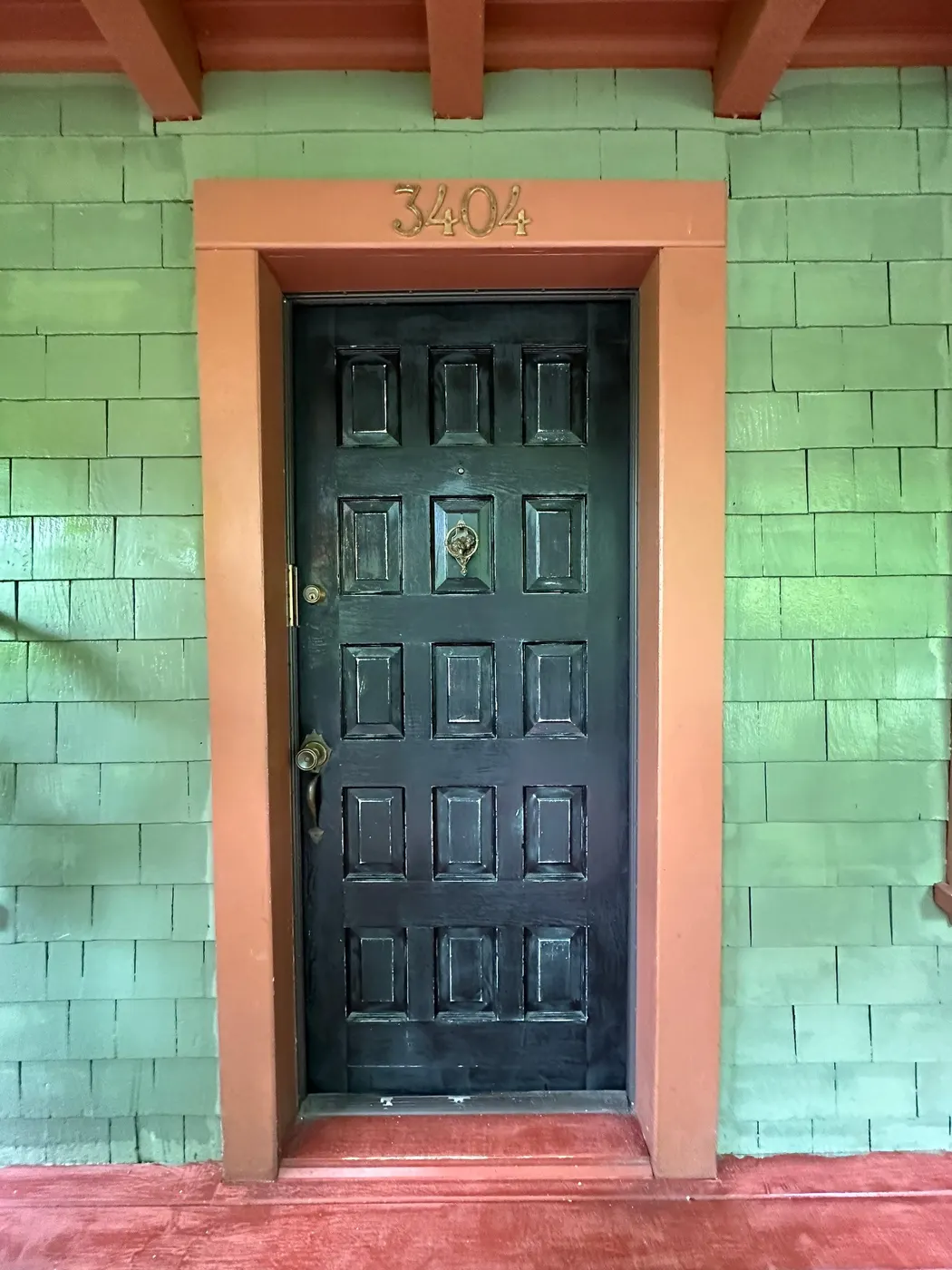
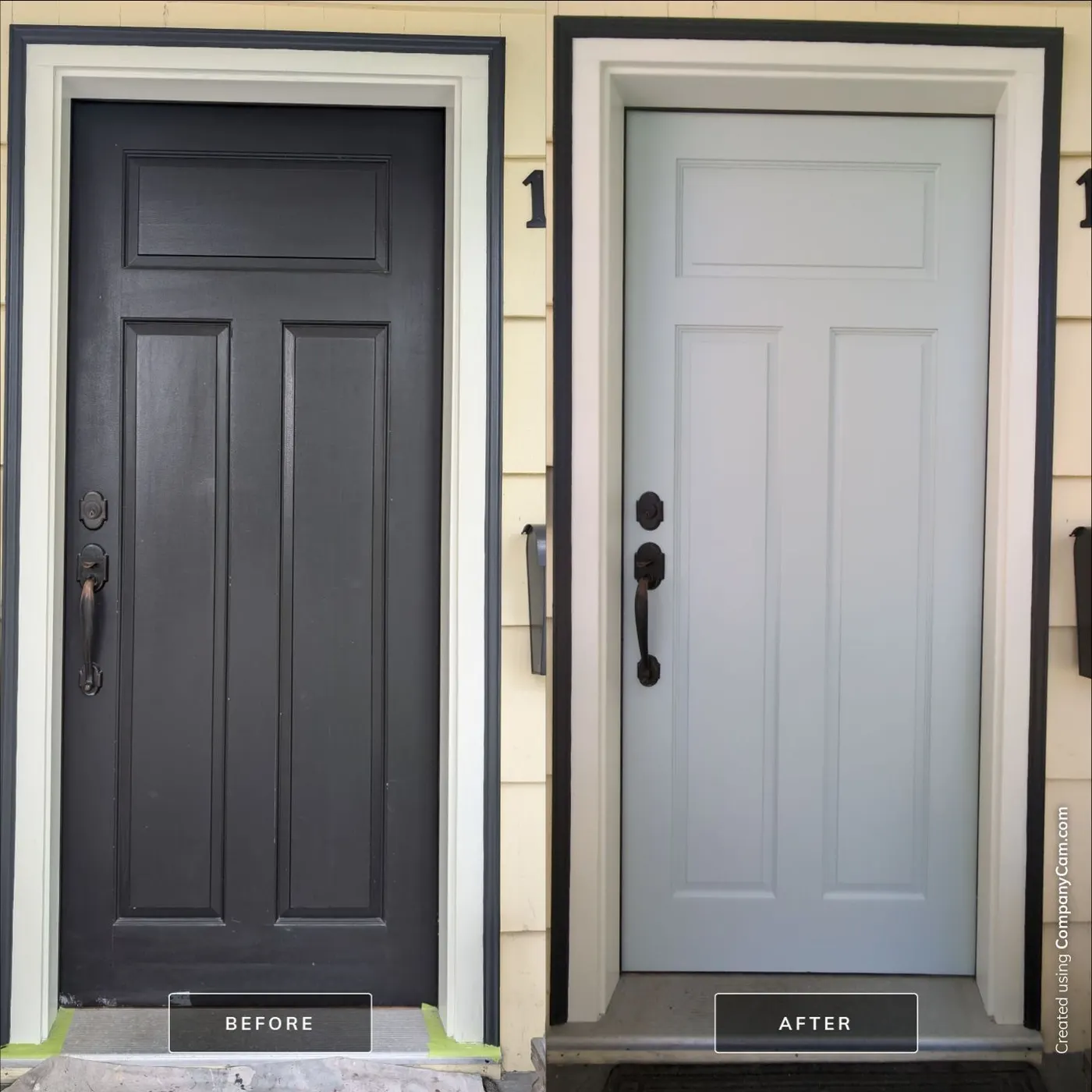
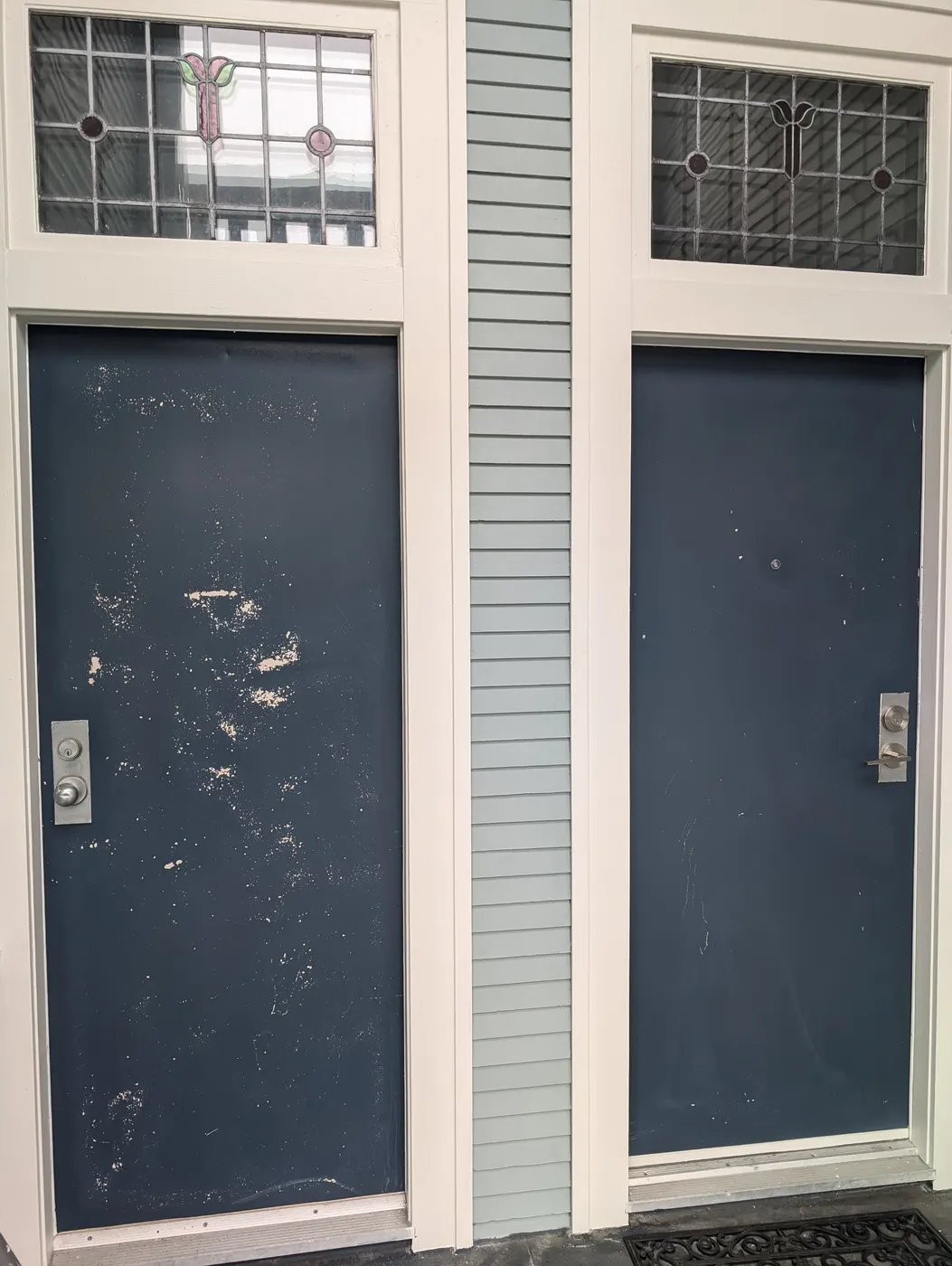
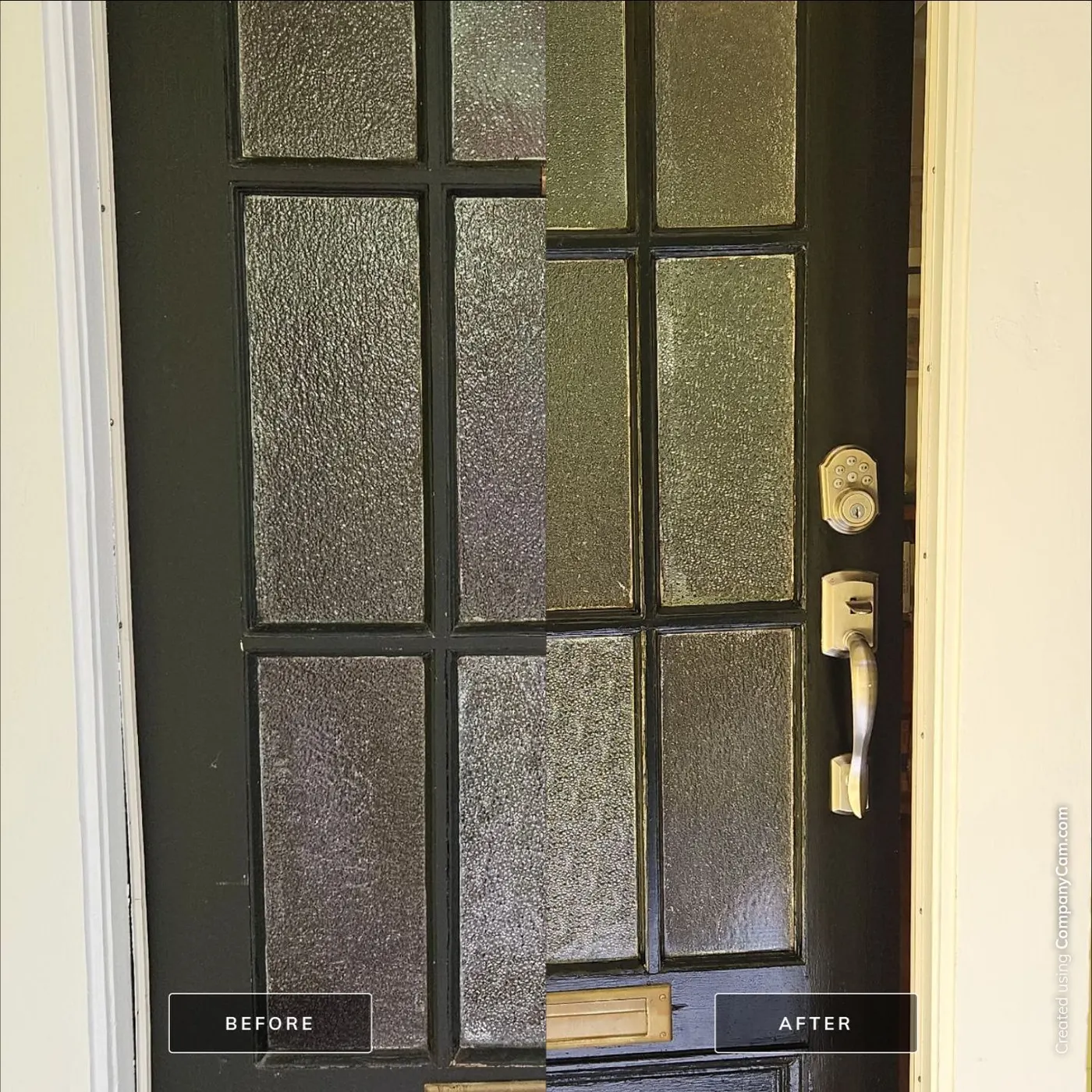
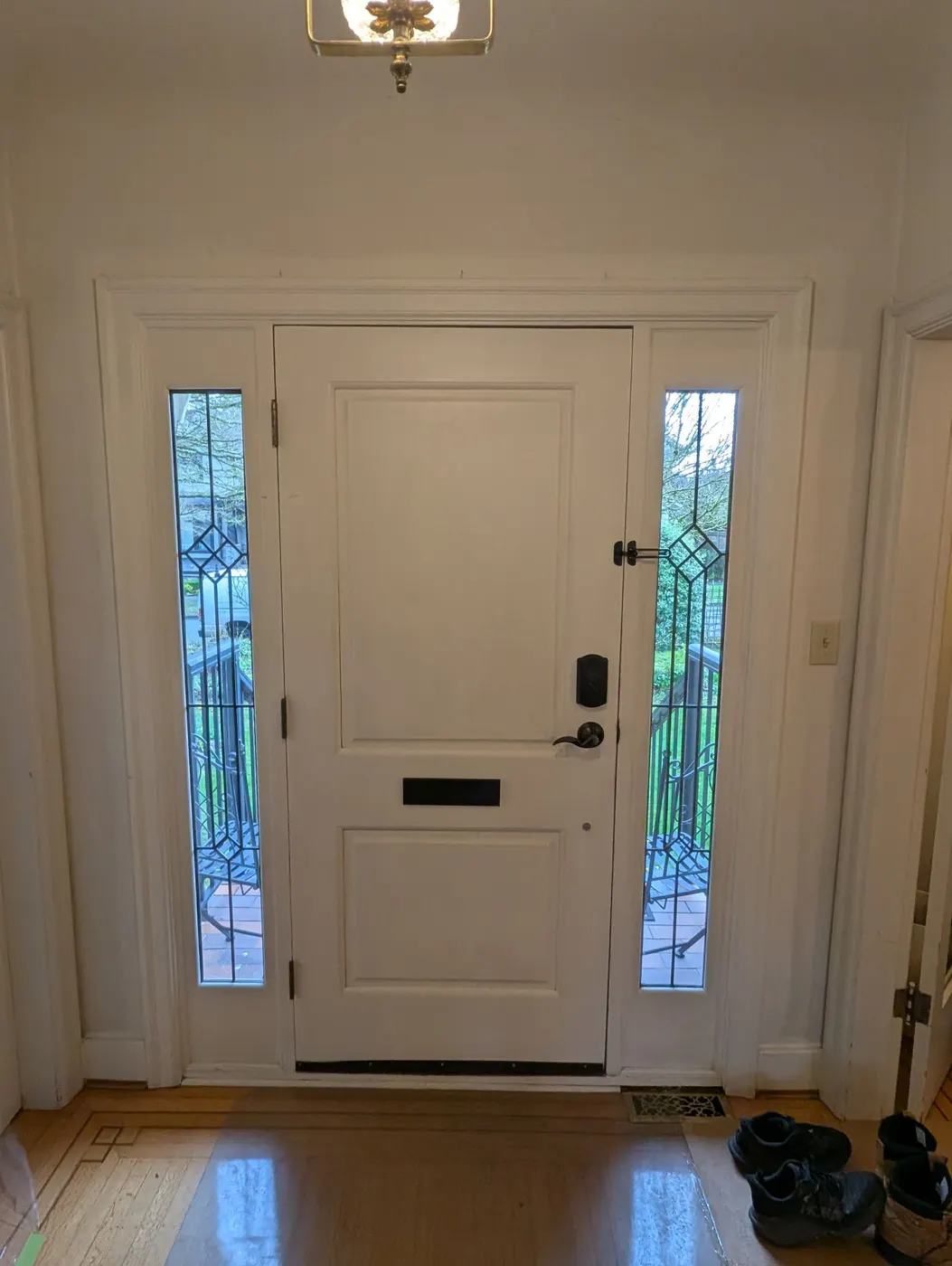
From Our Job Files
Recent door work, described the way it was scoped. Names and addresses stay private.
What can change the price after the quote
- The quote is a fixed written price for the scope we walked through. It moves only if the scope moves, and you hear about it first.
- A door that needs planing, a new strike plate or a replaced panel before it will paint - shown to you and priced first.
- Old oil paint that fails the adhesion test needs a full bonding-primer coat; that is added per door.
- Colour change on a dark door to a light one can take a third coat.
- Swapping hardware after the quote: filling and redrilling holes is per door.
Watch Our Video on Exterior Door Painting
What We Run Into With Vancouver Doors
Doors appear in two of every three exterior scopes in our files and about half of the interior ones - Kitsilano, West Point Grey, Mount Pleasant and South Cambie most often. They are rarely the whole job, but they are the part the owner notices.
Front and garage doors. Painted with the trim on an exterior repaint: wood doors sanded and filled, garage doors washed and scuffed, both finished in the trim colour or an accent. Weather-facing doors get an exterior enamel that stays flexible.
Interior doors in older houses. Decades of oil paint, often over original fir. Scuff-sand, bond-prime, two coats of Benjamin Moore Advance. Where the doors are beyond it - split panels, planed too many times - our carpenters replace doors, closet doors, casings and baseboards to match the era, then paint.
Small fixes we do on the way. Screen doors installed, sticking doors tuned up, lobby doors repaired with restoration putty rather than replaced, metal heat registers and doors primed with a rust-inhibiting primer.
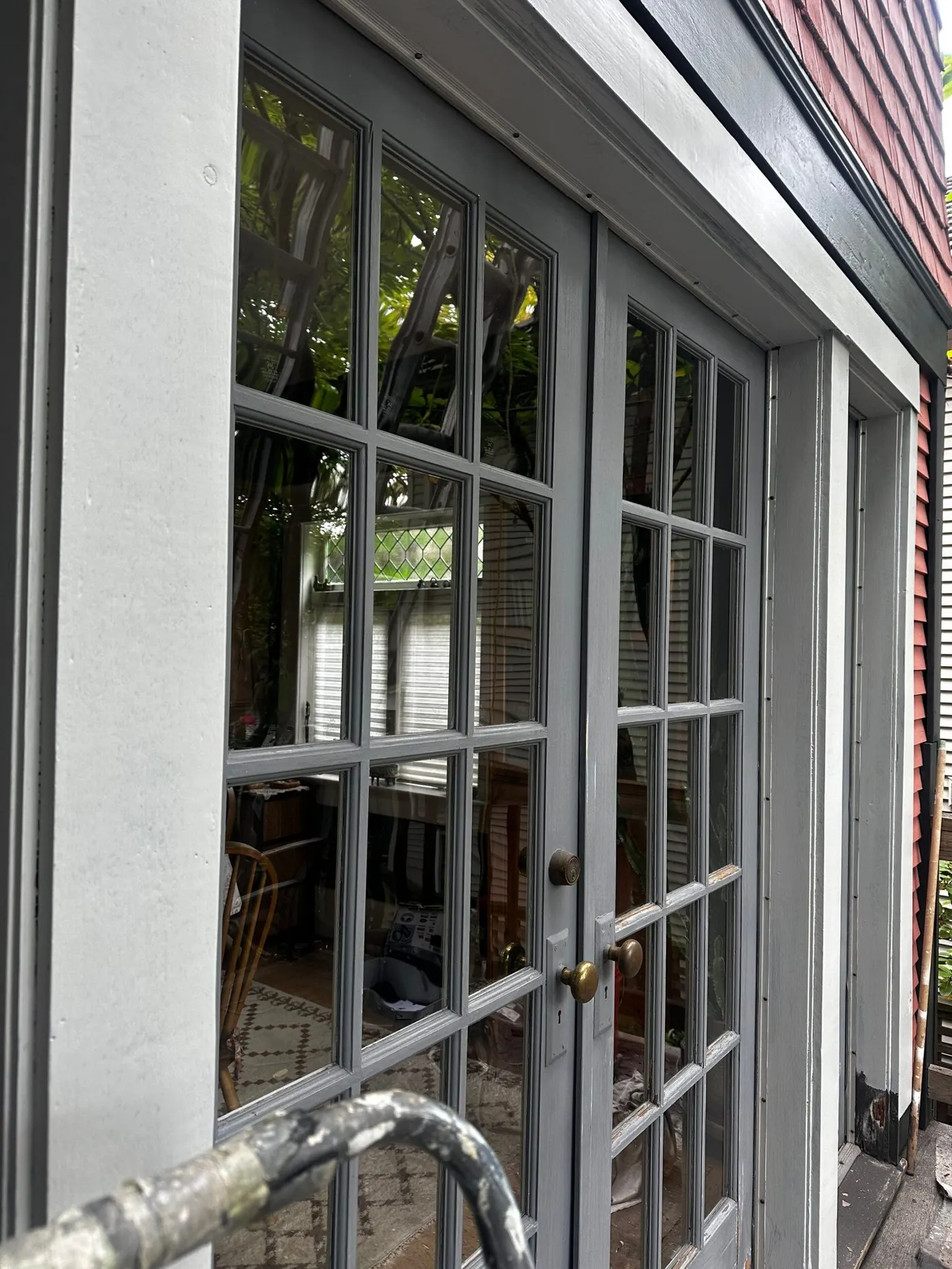
Professional Door Painting Services Prices
Revitalize your doors with expert painting—enhancing curb appeal and protecting your investment for years to come.
Entry Door in Good Condition
For doors in great shape, this package includes light cleaning, minimal surface preparation, and a fresh coat of premium paint to achieve a flawless finish quickly and efficiently.
Get StartedEntry Door in Poor Condition
Perfect for doors needing moderate care, we provide deep cleaning, sanding, minor repairs, and multiple coats of top-quality paint to restore the door's original beauty.
Get StartedEntry Door in Poor Condition + Extra work
For doors requiring significant repair and attention, we offer thorough preparation, repairs, and multiple paint layers to ensure exceptional durability, protection, and a stunning transformation.
Get Started*Prices are averages and may vary based on the size of your door, the extent of repairs needed, and your choice of paint finishes. You’ll receive a precise quote for your door painting project after an on-site assessment.
Frequently Asked Questions
What is the difference between interior door painting and exterior door painting?
Two things change, and the paint is only one of them.
Exterior doors take direct weather and UV, so they get coatings built for it - Sikkens ProLuxe Rubbol Solid where a solid-body finish suits the wood, or Benjamin Moore Aura exterior in a satin trim sheen. Interior doors and casings usually get a waterborne alkyd in satin. It levels out like traditional oil and cures hard enough for a door that gets handled every day, without the odour and VOCs of the old alkyds.
The second difference matters more, and almost nobody asks about it: the top and bottom edges. A door drinks water through unfinished end grain, then swells, sticks, and starts rotting from the inside out. On exterior doors we seal the top and bottom edges as part of the job. Most of the doors we take off have never been coated there.
My door was painted years ago and I do not know what is on it. Does that matter?
It is the single most common reason a door repaint fails.
If the existing coating is an old oil-based paint and a waterborne finish goes straight over it, the two will not bond. It looks right for a season, then lets go in sheets, usually through the first wet spring. When we find oil underneath, the door and jamb get primed with an enamel undercoat first so the new finish has something to grip.
We check rather than guess. If the answer is not obvious we will tell you before we quote, because it changes the preparation and therefore the price.
My house is older. Should I be worried about lead paint on the door?
If the house went up before 1990, assume there is lead in the older coatings until something proves otherwise. Canada did not tighten the consumer limit to 90 ppm until 2010, and paint sold for decades before that carried far more. A door is the worst case: a surface repainted many times over, and a job that involves sanding it.
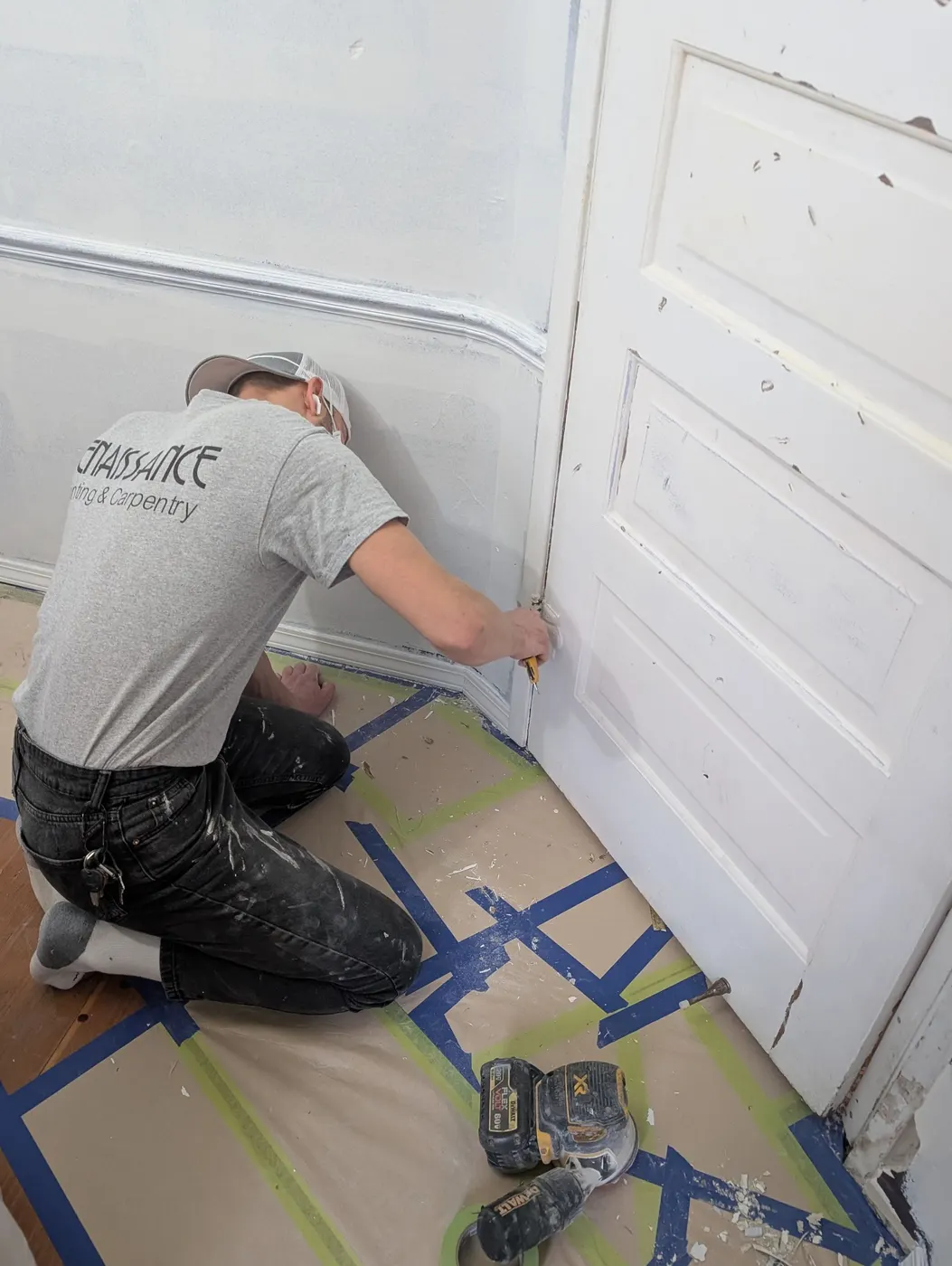
So we sand on dust extraction rather than dry-sanding into the room, sheet and contain the work area, and HEPA-vacuum before we leave. Our crews carry lead-safe work practice training, and it is the same method whether or not anyone has tested the paint.
If you want certainty instead of precaution, testing before we start is straightforward, and we will tell you plainly what a positive result changes about the scope and the cost.
How long does it take, and do you spray doors?
It depends whether it is a repaint or a strip.
A door in sound condition is usually one to two days of on-site work. What sets the pace is not us, it is the recoat window on the manufacturer's data sheet. Force a second coat on early and you get a soft film that prints, blocks against the jamb, and marks the first warm afternoon somebody leans on it.
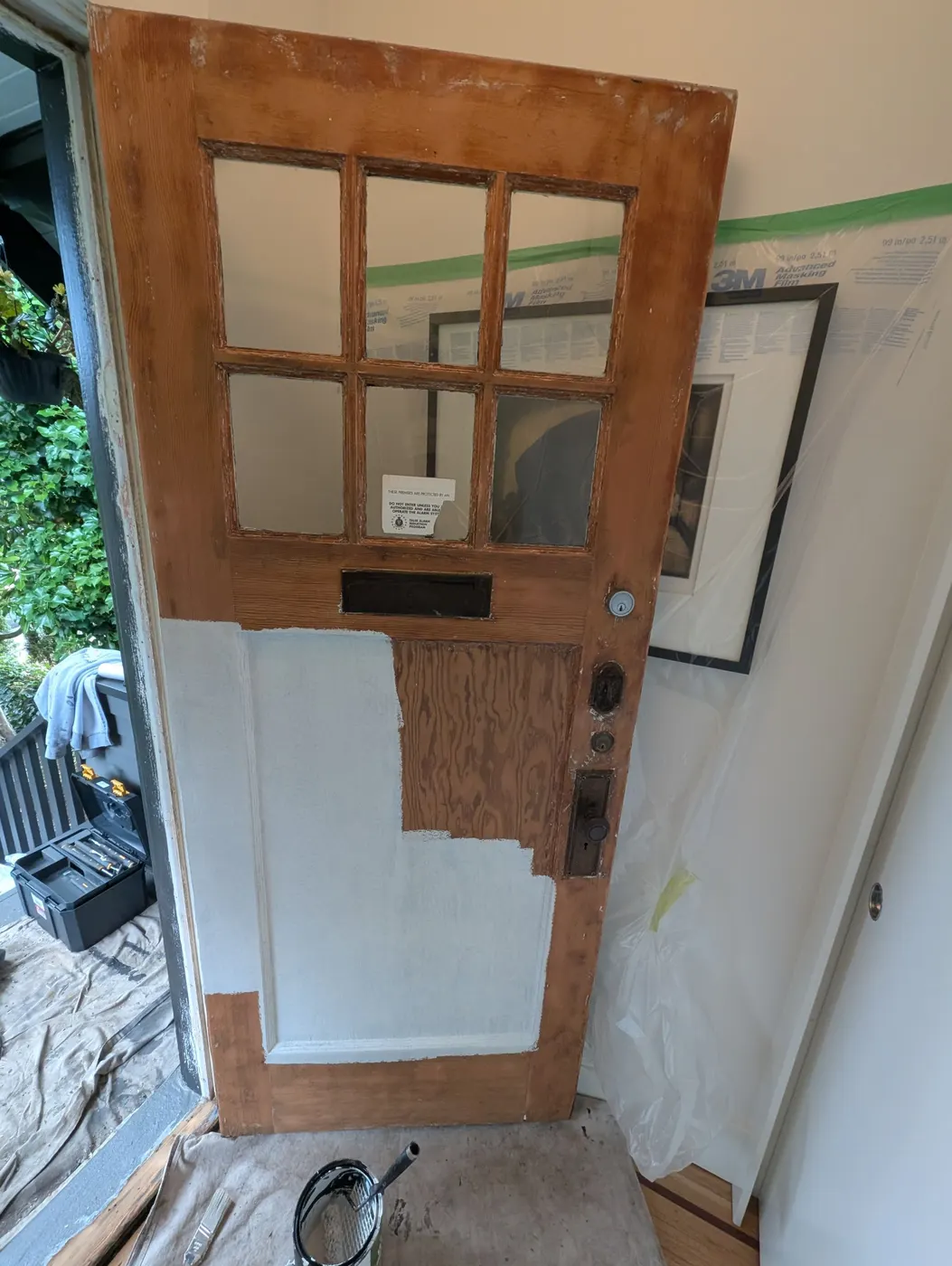
Stripping back to bare wood is a different job. On a heritage six-lite fir entry door in Kitsilano this past summer, first sanding to final coat ran about a week - sanded in place on dust extraction so the house stayed liveable, then stripped, primed and finished, with the original mail slot and mortise lock kept.
On spraying: cabinet doors and drawer fronts come off their hinges and are sprayed in a controlled space, which is the right way to get a factory-flat finish on a flat panel. Entry doors, jambs and casings we brush and roll, with a 2½ or 3 inch Purdy. On a panelled or heritage door you want the coating worked into the profile and the joints, not laid across the top of them.
Can you handle commercial and strata door painting?
Yes. Alongside houses we work on strata buildings and commercial properties across Vancouver and the Lower Mainland - lobbies, corridors, amenity rooms, entry doors and the common-area trim that goes with them.
High-traffic entryways get specified differently from a family front door: harder-wearing enamels, and scheduling that keeps a lobby or corridor usable while we are working in it. Strata jobs are staged around resident access, and we agree that sequence with your property manager or council before anyone starts.
What is included in the estimate, and why are there three price tiers?
The three tiers on this page come down to one thing: what condition the door is in when we get there. A sound door needs cleaning, light sanding and coating. A weathered one needs stripping, filling and rebuilding of failed sections before any finish goes on. That is labour, and labour is most of the number.
An estimate covers labour, materials, rentals, insurance and disposal. Taxes are extra. The finish standard is written into every quote we issue: two coats, free of runs, sags, drips and holidays, prepared and applied to the Master Painters Institute Repainting Manual and the Craftsmanship Operating Procedures set out by the PDCA.
Anything we cannot price until we open it up is named in the quote rather than buried in it. You get a firm number after an on-site look, not over the phone.
What if the door is damaged, sticking, or needs replacing?
We fix doors as well as paint them. Bifold doors that will not run, screen doors, sagging jambs, rot at the bottom rail - that is ordinary work for us, and because our carpenters and painters are the same company you are not waiting on a second trade to show up.
When a door is past saving we quote the labour to remove and replace it, and carry the door itself as an allowance, meaning a budgeted figure. Door costs vary enormously by type, and an allowance keeps that visible in the quote instead of hidden inside a lump sum. Once you have chosen the door, the allowance is trued up to what it actually cost.
Can you paint the casing, jamb and baseboards to match?
Yes, and most people should. A freshly painted door against tired casing just draws the eye to the casing.
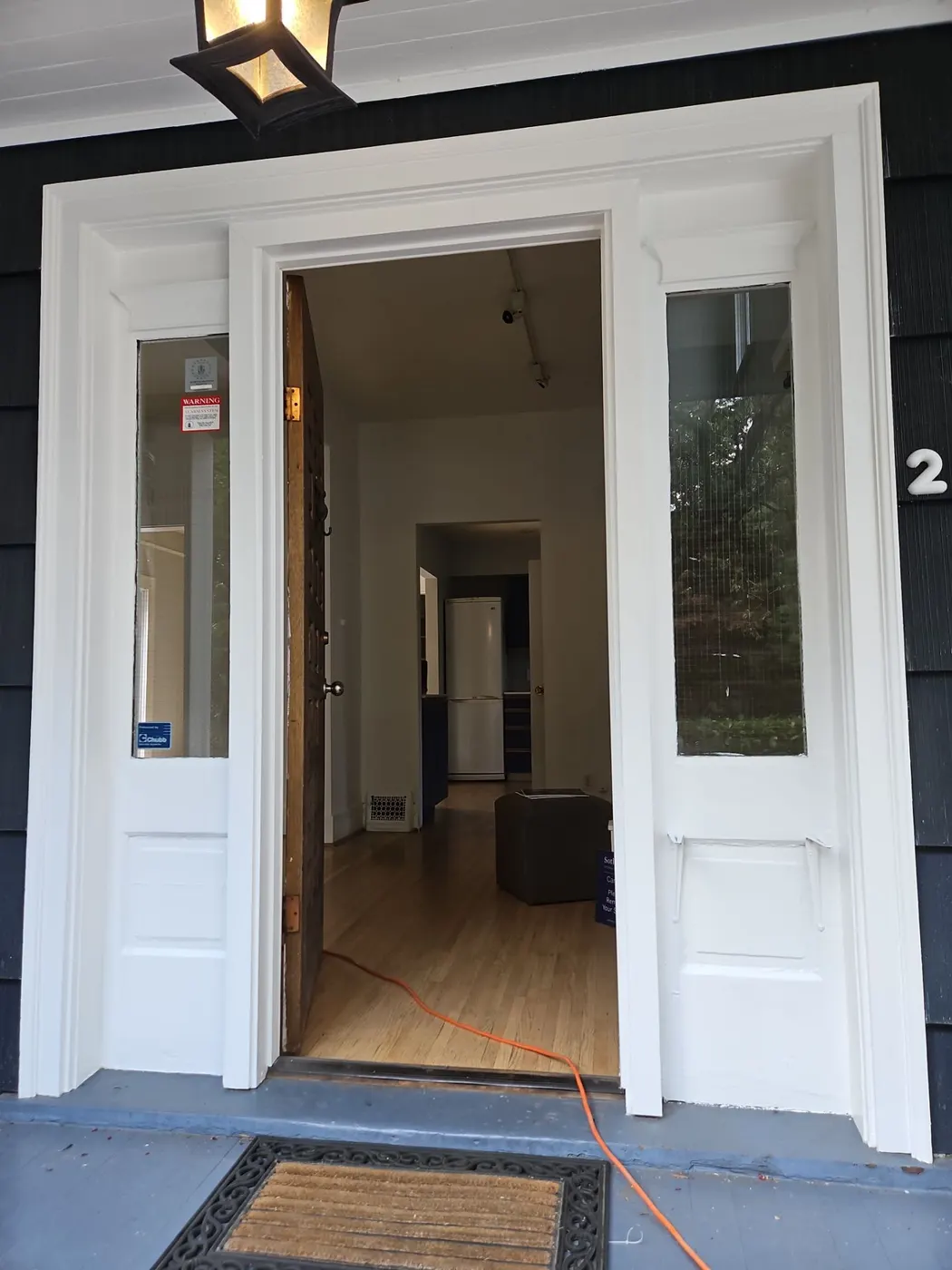
We scope doors, door frames, casings and sills as separate surfaces so nothing gets missed, and we match sheen and colour across the door, the casing and the baseboard so the transition looks deliberate. If the casing itself is damaged or dated we can replace it first - on one interior job we pulled the old casings and installed new ½ by 2½ inch stock before any painting started.
Who wrote this. The Renaissance crew, from our own job files. Owner Eric Goodwill is a Red Seal Painter and Decorator and has run the company since 1992. More about Eric
Ready To Start Your Project?
Free phone consultation with ballpark pricing - just send us a few photos.
Get A Quote