Short answer: cut in with a good angled brush, caulk gaps after priming, and only tape where you need a hard line between two colours - then pull the tape while the paint is still wet. On old Vancouver plaster, follow the line the wall actually has, not a perfectly straight one.
Table of Contents
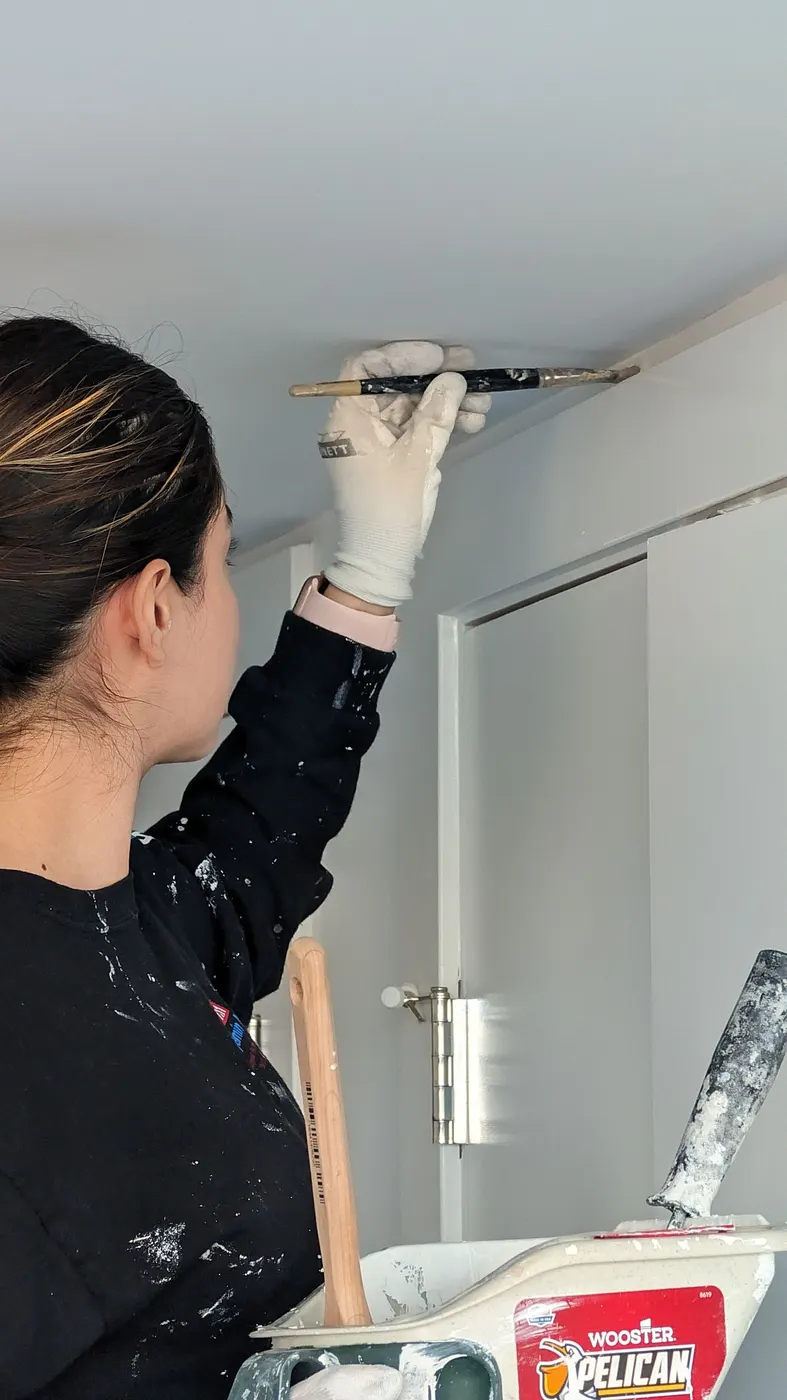
Cut in first, then roll
We cut in the corners, ceiling line and trim edges with a brush first, then roll the wall while the cut-in edge is still wet. Rolling into wet paint avoids the "picture frame" band you see when the brushed edge dries before the roller gets there.
- Brush: a 2 to 2.5 inch angled sash brush. We use Purdy brushes on every job.
- Load: dip a third of the bristles, tap off - do not wipe.
- Technique: lay paint a short distance from the line, then drag it in toward the corner with the tip.
Caulk after priming, not before
Caulk sticks better to primed surfaces. We prime, then caulk the gap between trim and wall, and the cracks in inside corners, then paint. A straight bead of caulk makes the cut-in line look straight.
Tape: when it helps and when it does not
- Use tape for a hard line between two colours - a two-tone hallway, an accent wall, a stripe.
- Skip tape where wall meets white ceiling or trim in the same room you are cutting in anyway. A steady brush is faster and cleaner.
- Pull tape while the paint is wet, at a low angle. Dry paint peels with the tape.
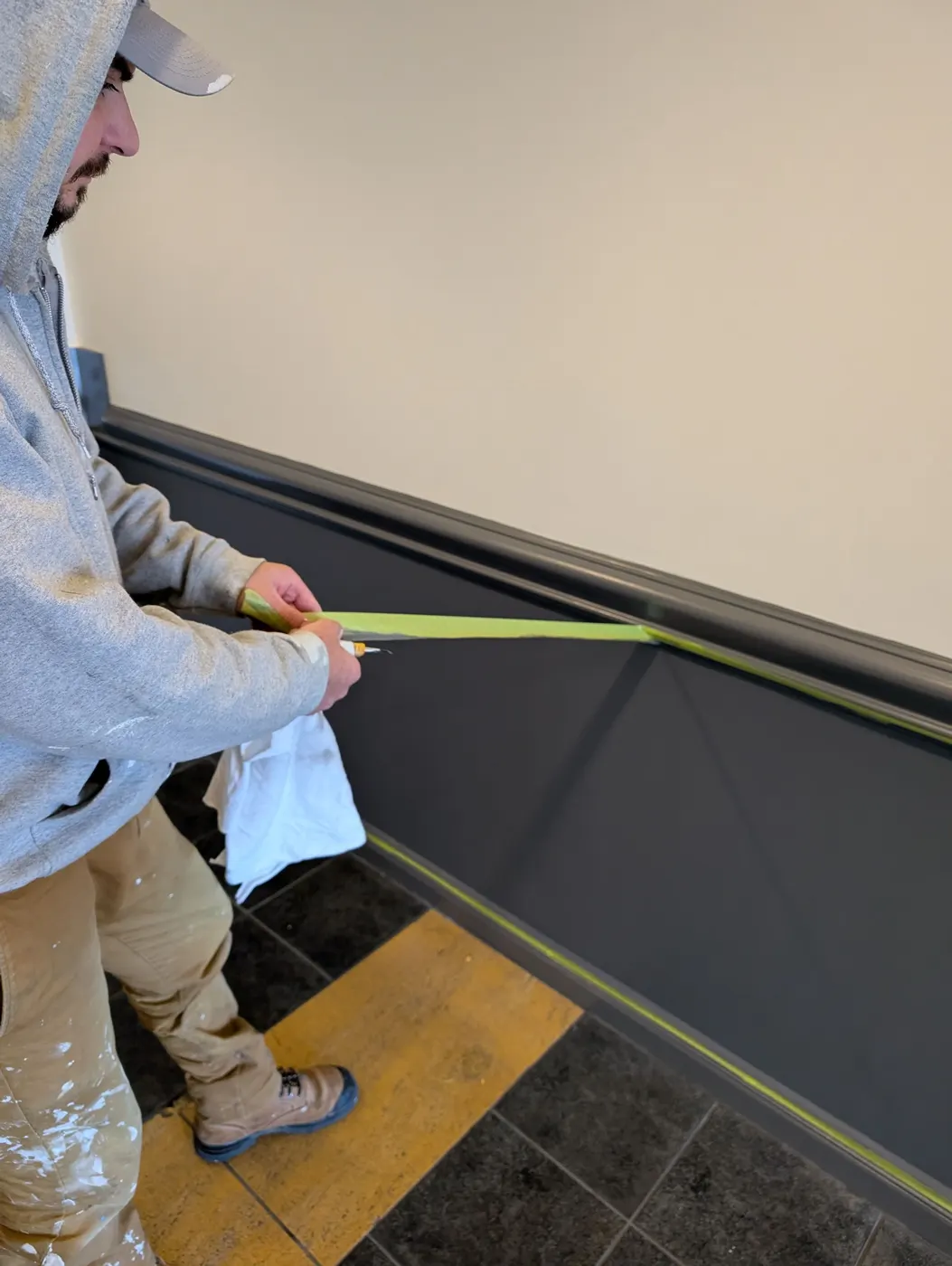
Inside corners on two colours
Paint the lighter colour first and let it overlap a little onto the second wall. Once dry, tape over it on the light side and paint the darker wall. The darker colour hides the overlap.
Old Vancouver houses: plaster and textured ceilings
- Plaster corners are not straight. In many pre-war houses the corners wander. Follow the corner by eye rather than snapping a straight line that makes the wall look crooked.
- Textured ceilings. A wall-ceiling line on a popcorn ceiling is never razor sharp. Cut a slight distance down the wall for a clean line.
- Test before you scrape. In BC, homes built before 1990 should be tested for asbestos before textured ceilings or old drywall mud are disturbed. We have had ceilings declared asbestos-free test positive - test first.
Outside corners and trim edges
Outside corners chip. Sand them lightly so the paint has something to grip, and use a durable trim enamel on corners that get knocked - hallways, stairs, doorways.
Frequently asked questions
Should I paint corners or walls first?
Corners and edges first, then roll the walls while the edges are still wet.
How do I stop paint bleeding under tape?
Press the edge down firmly, or seal it with a thin coat of the base colour first, then paint. Pull it while wet.
What brush is best for cutting in?
An angled sash brush, about 2 to 2.5 inches, with good-quality bristles.
How do I fix a wobbly ceiling line?
Let it dry, then re-cut the line with ceiling paint, working back down onto the wall.